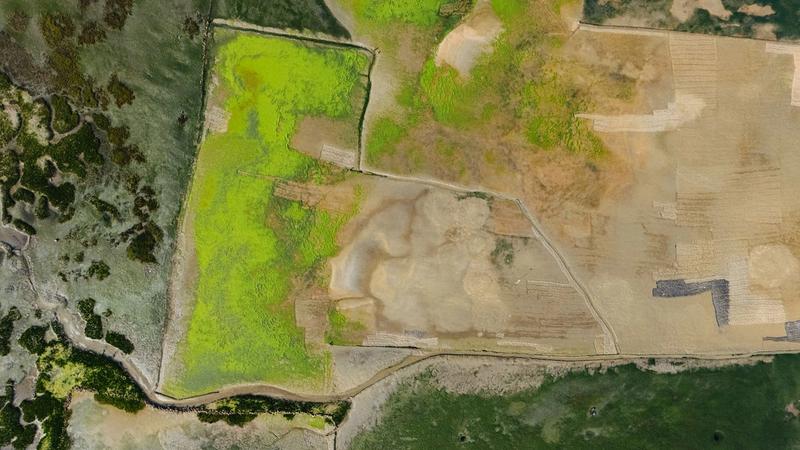
A peatland can look modest: a mossy bog, a reed-filled fen, a swamp forest or an open, waterlogged plain. But below its surface lies a record of plants that grew, died and only partly decomposed over centuries or millennia. That partly decayed material is peat, and it makes these landscapes unusually important to the climate.
Peatlands cover only a small share of the world’s land, yet they hold an outsized reserve of carbon in their soils. Their value is not just about carbon, though. When functioning well, peatlands can slow water flows, support distinctive wildlife, reduce some fire risks and help sustain water quality. When drained or burned, many of those benefits reverse.
That shift explains why peatlands have become central to environmental policy. Protecting them is less like planting a new carbon store than preventing an old one from leaking.
What makes a peatland different?
Peatlands form where the ground stays wet enough that dead plant matter breaks down very slowly. In most soils, microbes and oxygen rapidly turn fallen leaves, roots and wood back into the carbon cycle. In waterlogged ground, oxygen is scarce, decomposition slows, and organic material accumulates layer by layer.
The result is a living ecosystem over a deep organic soil. “Peatland” is therefore a broad term, not a single landscape type. Bogs are often fed mainly by rainwater and can be acidic and nutrient-poor. Fens usually receive groundwater or surface water and may support a different mix of sedges, grasses and other plants. Forested swamps can also build peat beneath trees.
The defining feature is hydrology: water is not incidental scenery but the system that keeps peat intact. Change the water table, and the peatland’s biology, fire behavior, vegetation and climate impact can all change with it.
- Peat is accumulated organic matter, not simply ordinary mud or wet soil.
- Healthy peatlands can be found in cold northern regions, tropical forests, mountain areas and lowland basins.
- Their carbon is stored largely below ground, which makes it easy to overlook compared with a forest’s visible trunks and canopy.
Why waterlogged soil can become a carbon vault
Plants pull carbon dioxide from the air as they grow. In a peatland, some of that carbon remains in dead plant material because saturated conditions slow decomposition. Over very long periods, the soil becomes a carbon vault built from countless growing seasons.
The scale is striking. UNEP’s Global Peatlands Assessment estimates that peatlands cover roughly 3–4 percent of the planet’s land surface but contain up to one-third of the world’s soil carbon—about twice as much carbon as the world’s forests. These figures are global estimates rather than a precise inventory: peat depth, boundaries and condition are still incompletely mapped in many places.
This does not mean every intact peatland behaves identically in every year. Wetlands can emit methane, a potent greenhouse gas, and carbon exchange changes with water level, vegetation, temperature and season. Still, the long-term accumulation of peat is the crucial fact: undisturbed peat represents carbon that has stayed out of the atmosphere for a very long time.
What drainage does to peat
Draining a peatland lowers its water table to make land easier to farm, graze, build on, log or extract peat from. It may appear to create more usable land in the short term. But it exposes formerly saturated organic material to oxygen, allowing microbes to decompose it faster and release carbon dioxide.
Drainage can trigger a chain reaction. As peat oxidizes, the ground may subside—literally sink—because the soil volume is being lost. Drier peat is also more vulnerable to fire. A peat fire can smolder underground, prove difficult to extinguish and release carbon accumulated over long periods. Lower water levels can additionally degrade habitat and alter how a landscape stores, filters and releases water.
UNEP estimates that about 12 percent of peatlands have been drained and degraded, contributing around 4 percent of annual human-caused greenhouse-gas emissions. Exact proportions and emissions vary by country and methodology, but the underlying mechanism is well established: drying peat turns a long-term store of organic carbon into a source of emissions.
Why restoring a peatland is not as simple as planting trees
The core restoration action is usually rewetting: blocking or filling drainage ditches, changing water-control structures and allowing the water table to rise. In principle, this stops or sharply reduces the oxygen-driven decay that follows drainage. In practice, restoration is a landscape project, not a quick fix.
Water must be managed carefully. Nearby farms, roads, homes and infrastructure may have been designed around a drained landscape. Land managers also need to consider water quality, local livelihoods, native vegetation, invasive species and wildfire planning. A successful project may require years of monitoring rather than a single construction season.
There is also an important climate nuance. Rewetting often reduces carbon-dioxide emissions from decomposing peat, but it can increase methane emissions, especially in some early stages or under particular conditions. The IPCC emphasizes that climate outcomes depend on climate zone, previous land use and management. That is a reason for careful measurement, not a reason to preserve drainage: carbon dioxide from exposed peat can continue accumulating in the atmosphere for far longer than methane’s shorter-lived warming effect.
- Rewetting aims to restore the water conditions that allowed peat to form.
- Restoration can bring trade-offs, especially where drained peatlands now support agriculture or settlements.
- Climate claims should account for carbon dioxide, methane and nitrous oxide rather than treating every wetland intervention as automatically beneficial.
A broader environmental case for keeping peat wet
Climate is only one reason peatlands matter. The Global Wetland Outlook notes that wetlands help regulate water flows, support biodiversity and contribute to water security. In a peatland, wet vegetation and soil can store water during wet periods and release it more gradually later—though the effect differs greatly by site and cannot replace flood-safe planning or water infrastructure.
Peatlands can also be ecological specialists. Their nutrient-poor, acidic or permanently wet conditions favor plants and animals adapted to environments that are rare elsewhere. When peatlands are converted into simplified agricultural land or dried into shrubland and forest, those species can lose habitat even if the land remains green.
The broad lesson is unusually clear: peat itself is an environmental asset. It took a long time to accumulate, and once it is oxidized or burned, rebuilding it is exceptionally slow. The most effective strategy is generally to avoid creating the damage in the first place.
What a serious peatland strategy looks like
At a national or regional scale, peatland protection starts with knowing where peat exists and what condition it is in. Mapping matters because peat soils can sit beneath forests, farms and apparently ordinary grassland. Governments can then prioritize intact sites, prevent new drainage, monitor water levels and include peat emissions in land-use and climate accounting.
For already drained areas, the challenge is to align restoration with people who depend on the land. One option is paludiculture: producing useful crops or materials under wet conditions rather than treating drainage as the only route to economic use. What works will differ by location, market, culture and hydrology, so there is no universal template.
Peatlands are not a substitute for rapidly cutting fossil-fuel emissions. Their protection cannot cancel continued pollution elsewhere. But preserving them is a highly practical form of climate action: keep ancient carbon in the ground, retain a working water system and protect ecosystems that cannot be quickly recreated.
Final thoughts
Forests rightly receive attention because their carbon is visible. Peatlands deserve comparable attention precisely because their carbon is mostly hidden.
The central principle is simple: wet peat is resilient carbon storage; dry peat is a long-term liability. Keeping these landscapes wet protects more than a patch of soggy ground—it protects a slow-built archive of carbon, water and life.
Sources
Photo by Raul Ling on Pexels.