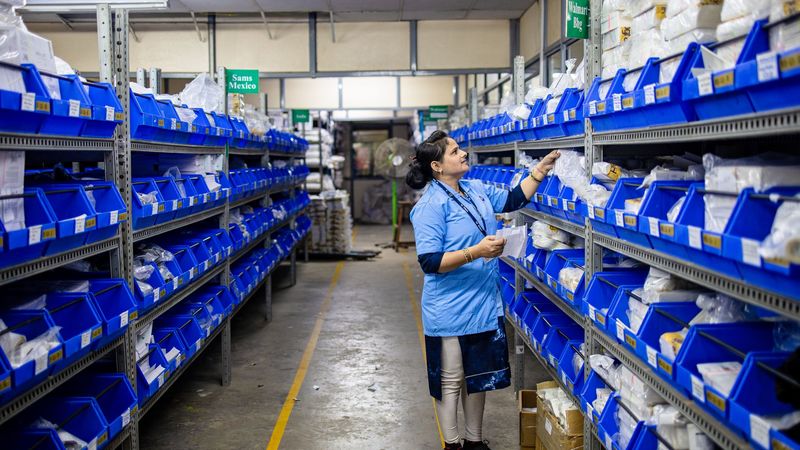
A return looks simple from a shopper’s point of view: send an item back, receive a refund, move on. For a retailer, though, that same item begins a second supply-chain journey—one that must be fast, traceable, and economically rational.
This process is called reverse logistics. It includes retail returns, exchanges, warranty items, repairs, recalls, reusable packaging, refurbishment, resale, recycling, and disposal. Its purpose is not merely to move unwanted goods backward. It is to decide, item by item, what should happen next to preserve as much value as possible.
That has become a central business problem rather than a warehouse afterthought. In the National Retail Federation’s 2025 survey, retailers estimated that returned merchandise would equal 15.8% of annual sales, or about $849.9 billion. The scale explains why a return policy now affects product design, customer service, inventory planning, fraud prevention, and the economics of an entire retail business.
A return is an inventory decision
Forward logistics is built around predictable repetition: receive inventory, store it, pick it, pack it, and deliver it. Reverse logistics begins with uncertainty. A returned item may be unopened and ready to sell again, or it may have damaged packaging, missing parts, signs of use, a defect, or a safety issue. It may arrive when demand is high—or after the relevant season has passed.
The retailer’s first task is therefore classification. At a returns center, workers or automated systems identify the item, verify that it matches the return authorization, inspect its condition, and assign a grade. That grade directs the item to a channel: back into regular inventory, an outlet or recommerce marketplace, repair or refurbishment, donation, recycling, manufacturer recovery, or disposal.
The key is speed. An item that can be resold today may lose much of its value after a fashion season, product launch, or holiday period ends. Quick inspection also reduces the time inventory remains invisible: technically owned by the business but unavailable to sell. In practice, reverse logistics is partly a race against depreciation.
- Restock: suitable for sale through the original retail channel.
- Recommerce: sold through an outlet, liquidation, or third-party resale channel.
- Repair or refurbishment: restored for resale, warranty replacement, or parts recovery.
- Recycling or disposal: used when safe resale and recovery are not feasible.
Customer convenience and cost pull in opposite directions
Shoppers often assess a return policy before completing a purchase. A clear process, accessible drop-off options, and predictable refunds can lower the perceived risk of buying online—especially for products whose fit, color, or performance cannot be fully judged on a screen. The Federal Trade Commission advises consumers to check return deadlines, return-shipping costs, and restocking fees before purchasing, which shows how much these details matter at the point of sale.
Yet the features customers value can create costs for the seller. Free return shipping, extended windows, instant refunds, and multiple drop-off locations can increase conversion and trust, but they may also raise transportation, handling, and fraud expenses. A policy cannot be evaluated only by asking whether its return rate falls. An overly restrictive policy may discourage good customers or shift service problems into call centers and public complaints.
The useful business question is narrower: which return experience produces the best overall result after considering sales, repeat purchases, product recovery, operating costs, and losses? Different categories call for different answers. A low-value, bulky item may be uneconomical to ship back. A high-value electronic device may justify detailed inspection, data-security procedures, repair, and resale. A formalwear retailer may need controls that differ from those of a home-goods seller.
- State eligibility, deadlines, fees, and condition requirements before checkout.
- Offer exchanges or store credit where they genuinely create value, rather than treating every return identically.
- Match the return method to the item’s value, size, hazard profile, and resale potential.
- Make exceptions deliberate and documented, not dependent on inconsistent frontline decisions.
The best fixes happen before the sale
A returns operation can recover value, but prevention is usually more profitable than processing. Return reasons are a source of product and merchandising intelligence. Repeated returns for “too small,” “not as pictured,” “arrived damaged,” or “missing part” point to different failures—and require different owners to act.
For apparel, better sizing information, fit guidance, and product photography may reduce avoidable orders. For electronics, clearer compatibility information and setup support can prevent dissatisfaction that gets labeled as a product return. For fragile goods, packaging and carrier-handling data may reveal where damage occurs. For business-to-business sellers, purchase-order errors, substitution rules, and unclear specifications can produce costly reverse flows long before a warehouse sees the merchandise.
This is why returns data should not sit only with a logistics team. Merchandising needs it to improve assortments; product teams need it to identify design flaws; finance needs it to understand true margin by product; and customer-service teams need it to distinguish confusion from defect. A return code is useful only if it is specific enough to lead to an action.
- Track reason codes that describe the real problem, not just “customer returned.”
- Compare return patterns by product, channel, supplier, geography, season, and fulfillment method.
- Investigate sudden changes quickly; they may signal a listing error, quality issue, or fraudulent pattern.
- Measure recovered value alongside return volume, since not all returns are equally costly.
Consolidation changes the math
The physical movement of returns is expensive when every item travels separately. Retailers try to improve the economics by consolidating items at stores, partner drop-off points, or collection centers before sending them to a processing facility. This can reduce packaging needs, transportation touches, and the time spent handling individual parcels.
Integration with forward fulfillment matters too. When returned goods can be inspected and routed near the inventory that is being shipped out, a retailer may reduce transfers and return sellable goods to stock faster. The operational goal is not necessarily to bring every item back to one central warehouse. It is to route each item to the location where its next best use is most economical.
That routing decision depends on reliable information. A barcode scan or return authorization should connect the physical item to the order, condition assessment, refund status, inventory record, and final disposition. Without that visibility, businesses risk paying for unnecessary movement, issuing refunds without receiving the right product, or losing track of goods that could still be sold.
- Use standardized inspection criteria so similar items receive similar decisions.
- Set value thresholds that determine when return shipping, repair, or liquidation is worthwhile.
- Design refund timing and item-verification rules together to limit avoidable losses.
- Review carrier, warehouse, and resale-partner performance as one connected system.
Fraud controls should be precise, not indiscriminate
Returns create opportunities for abuse, including empty-box returns, substituted items, use-and-return behavior, and claims that an item never arrived. Retailers increasingly use data and item verification to identify unusual patterns. But a blunt response can damage legitimate customers, particularly when it treats a high return rate as proof of bad intent without considering category, fit uncertainty, or product defects.
Better controls focus on evidence. Item-level identifiers, photos at drop-off or receipt, serial-number checks where appropriate, consistent inspection records, and clear escalation paths can improve accuracy. The aim is not to make every customer prove innocence. It is to apply extra scrutiny where the transaction or product warrants it.
Businesses also need to protect information and handle end-of-life goods responsibly. For returned electronics, reuse and refurbishment can preserve value, but devices may hold personal or business data. The Environmental Protection Agency recommends certified electronics recyclers for unwanted equipment; recognized certification programs address environmental practices, worker safety, and data destruction requirements. In other words, the final channel is a compliance and trust decision as well as a cost decision.
- Separate ordinary customer mistakes from patterns that merit investigation.
- Build controls around item risk and transaction evidence, rather than a single customer score.
- Document how electronics and other sensitive goods are wiped, repaired, reused, or recycled.
- Audit downstream partners, because responsibility does not end when inventory leaves the warehouse.
Final thoughts
Reverse logistics is the business discipline of making the second life of a product as intentional as its first shipment. Strong programs connect a fair customer promise with rapid inspection, sensible routing, accurate data, and multiple recovery options.
The goal is not to eliminate every return. Some returns are the unavoidable cost of letting customers buy with confidence. The stronger objective is to learn which returns can be prevented, move unavoidable ones efficiently, and recover value without sacrificing trust. When retailers treat returns as a source of operational intelligence rather than a pile of exceptions, the backflow of goods can improve the forward business too.
Sources
Photo by Alexander Isreb on Pexels.