A city tree can look like decoration: a pleasant green interruption between the curb, the sidewalk, and a building. But its most consequential work is often invisible. Leaves intercept rain before it hits pavement. Roots and soil slow water that would otherwise rush toward drains. Canopies shade surfaces that store heat, while leaves release water vapor that cools the nearby air.
That makes urban trees a form of infrastructure—living infrastructure, with needs and limits that pipes and roads also have. The comparison is useful because it changes the question. Instead of asking whether a city should “add greenery,” planners and residents can ask where shade, water management, habitat, and cleaner air are most needed, and what it will take for trees to survive long enough to provide them.
A tree changes the physics of a street
Cities tend to replace absorbent ground cover with roofs, asphalt, concrete, and compacted soil. Those materials absorb solar energy, shed rain rapidly, and can make dense neighborhoods warmer than surrounding landscapes. A tree canopy pushes in the other direction through two linked processes: shade prevents sunlight from heating surfaces directly, and evapotranspiration uses heat as water moves from soil through the tree and into the air.
The distinction matters. Shade can make a person, a pavement surface, or a building wall much cooler even when the official air temperature has barely changed. Evapotranspiration can lower local air temperatures too, but its effect depends on moisture, weather, canopy form, and the surrounding built environment. A recent Forest Service review of 73 studies concluded that urban forests generally cool places, while also emphasizing that there is no universal cooling number that applies to every city or every planting project.
Measurements from New Haven illustrate the importance of context. Research using temperature sensors mounted on bicycles found that greater tree canopy was associated with cooler nearby air, especially around midday and in the afternoon. Impervious surfaces, by contrast, were especially associated with warming later in the day. The practical lesson is not simply “plant trees everywhere.” It is that canopy and pavement are competing parts of a neighborhood’s thermal design.
- Tree shade reduces the solar energy reaching roofs, walls, sidewalks, and parked vehicles.
- Evapotranspiration turns heat into the energy required to evaporate water from leaves and surrounding soil.
- Cooling varies by tree size, canopy density, local climate, irrigation, cloud cover, wind, and the amount of pavement nearby.
Their value is greatest when trees are connected to the rest of the city
Urban trees do not solve flooding or heat on their own. A small tree planted in a narrow, sealed sidewalk cutout cannot absorb the water from a major storm, and a newly planted sapling cannot immediately replace the shade of a mature canopy. Yet trees can strengthen a larger network of green infrastructure when they are given sufficient soil, room for roots, and a place in drainage design.
Rain caught by leaves and branches is delayed before reaching the ground. Water that reaches healthy, uncompacted soil can infiltrate rather than immediately becoming runoff. Roots help maintain soil structure, and a tree later returns some stored water to the atmosphere. The U.S. Environmental Protection Agency describes street trees as a useful stormwater-management component because leaves, stems, and roots slow, capture, and store rainfall. But research also warns against treating every tree as a fixed-volume stormwater device: effectiveness declines in larger, more intense storms and depends heavily on soil conditions.
This is why a well-designed tree planting may involve far more than a hole in pavement. It can include connected soil volumes, permeable surfaces, rain gardens, curb changes that direct water toward planted areas, and protection from repeated root disturbance. In this form, a tree is not an isolated amenity. It is one component in a system that handles heat and rain closer to where they occur.
- Large, healthy trees usually deliver more shade and rainfall interception than small, newly planted ones.
- Soil volume and soil quality are as important as the visible trunk and canopy.
- Trees complement drains, green roofs, permeable pavement, and rain gardens; they are not replacements for infrastructure designed for extreme events.
Planting is only the beginning of the job
Tree-planting targets are easy to announce because they produce a clear number. A more revealing measure is whether trees are alive, healthy, and growing decades later. Urban conditions can be punishing: compacted soils restrict roots; heat radiates from pavement; road salt and pollution add stress; vehicles damage trunks; utility work cuts roots; and drought can kill young trees before they establish.
Species choice also matters. A city that relies too heavily on one or a few species risks losing much of its canopy at once to a new pest, disease, or climate stress. Diversity spreads that risk, but it must be practical diversity. Trees need to fit the site’s mature height and width, available rooting space, overhead wires, local weather, and water conditions. The familiar horticultural rule—right plant, right place—is less a slogan than a maintenance strategy.
There are trade-offs as well. Trees require pruning, watering during establishment, leaf cleanup, and eventual replacement. They can conflict with solar panels, utilities, sight lines, or narrow sidewalks if poorly located. Some species emit volatile organic compounds that can contribute to air-pollution chemistry when combined with human-made pollutants. These are arguments for careful design and pollution control, not arguments that cities should abandon canopy. Living infrastructure needs management because it is alive.
- Protecting existing mature canopy is often more valuable in the near term than counting only new plantings.
- A resilient urban forest mixes species, ages, and planting locations rather than repeating one fashionable tree.
- Maintenance budgets should be planned at the same time as planting budgets.
Tree canopy is also a question of fairness
The benefits of urban trees are not distributed evenly. Across U.S. cities, researchers have repeatedly found that canopy patterns are associated with income, development history, density, and past housing policies. In a study of 37 metropolitan areas, formerly redlined neighborhoods had, on average, roughly half the tree canopy of areas once given the highest federal lending grade. The pattern does not mean a tree program can repair decades of disinvestment by itself. It does mean that canopy maps can reveal an environmental legacy that is still felt on hot days.
Equity is not achieved by drawing circles on a map and planting without local participation. Residents may reasonably worry about maintenance responsibilities, allergies, damaged sidewalks, blocked light, safety, or whether greening will accompany rising rents and displacement. The most durable projects pair heat and canopy data with neighborhood knowledge, clear maintenance commitments, and protection for existing residents.
A useful city-tree policy therefore starts with preservation: identify healthy mature trees and the soil systems supporting them. It then targets new canopy where heat exposure, low shade, flooding pressure, and lack of park access overlap. Finally, it measures survival and distribution—not merely seedlings placed in the ground. The goal is not a prettier streetscape in the abstract. It is a cooler, more water-resilient daily environment that lasts.
- Map heat, canopy, pavement, flood risk, and social vulnerability together rather than using a citywide average.
- Involve residents before selecting sites and species, and make responsibility for watering and pruning explicit.
- Track canopy survival and growth over years, because a planted tree and a functioning canopy are not the same thing.
Final thoughts
City trees are often described as a natural solution, but that phrase can make their success sound automatic. It is not. Their benefits depend on space, soil, water, species, care, and—above all—time.
When cities protect mature canopy and plan new trees as part of their heat, drainage, housing, and transportation systems, trees become more than scenery. They become durable public works that happen to grow.
Sources
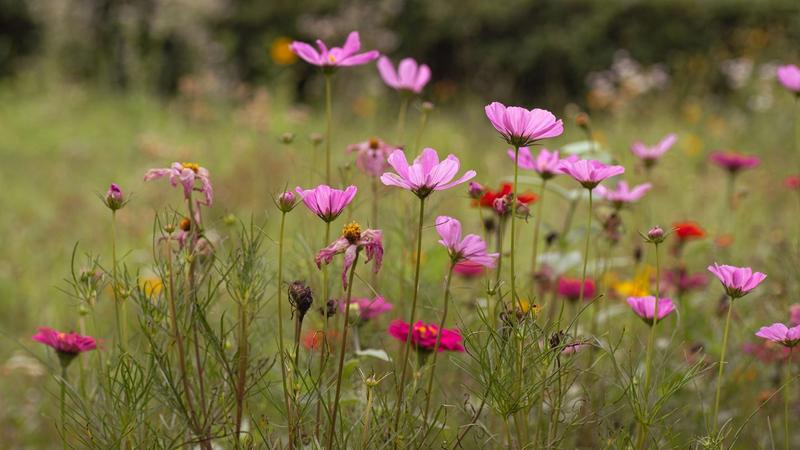
Photo by Bingqian Li on Pexels.