A home blood pressure monitor can turn a quick button press into useful health information—but only if the number reflects your usual blood pressure rather than a rushed morning, a badly positioned arm, or a cuff that does not fit. The practical goal is not to collect the lowest possible number. It is to create a small, repeatable record that a health care team can interpret in context.
That distinction matters because high blood pressure commonly has no noticeable symptoms, and because a single reading is only a moment in a variable biological process. Home measurements can help confirm whether an office result represents a lasting pattern, help track treatment, and reveal differences between clinical and everyday settings. ([cdc.gov](https://www.cdc.gov/high-blood-pressure/measure/?CDC_AAref_Val=https%3A%2F%2Fwww.cdc.gov%2Fbloodpressure%2Fmeasure.html))
Start with a monitor designed for the job
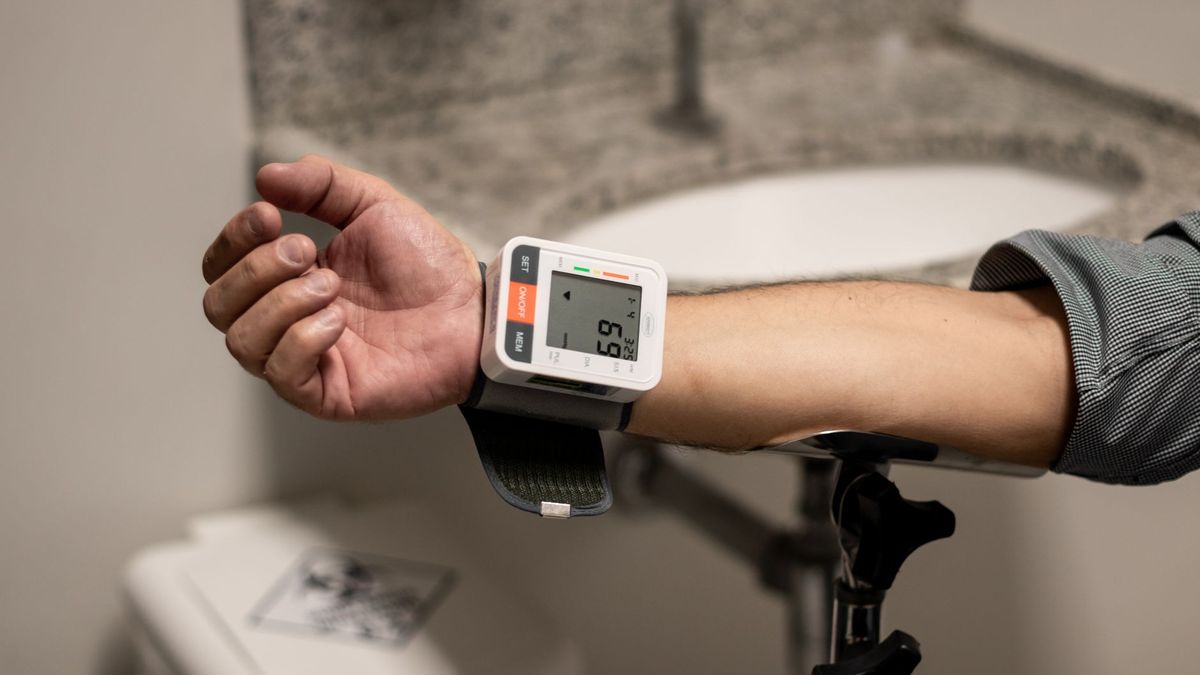
The first decision is more consequential than most people expect: buy or borrow an automatic monitor that uses a cuff around the upper arm. This is the measurement site used in standard blood-pressure assessment, and the American Heart Association recommends the upper-arm cuff style over finger and wrist devices for most home users. A wrist device may be appropriate in particular circumstances, but it is more sensitive to positioning and is best chosen with professional guidance. ([heart.org](https://www.heart.org/en/health-topics/high-blood-pressure/understanding-blood-pressure-readings/monitoring-your-blood-pressure-at-home))
“FDA cleared” and “clinically validated” are not interchangeable shopping shortcuts. A useful extra check is to look for the exact model—not merely the brand—on a validated-device listing. ValidateBP’s review criteria include documentation of independent testing under accepted accuracy protocols as well as cuffs tested and available for the intended population. That does not make a monitor infallible; it means there is evidence that the device can measure accurately when it is used as intended. ([validatebp.org](https://www.validatebp.org/index.php/manufacturers))
- Choose a cuff size based on the circumference of your bare upper arm, using the manufacturer’s sizing range.
- If you are pregnant, buying for a child, or have an unusually small or large upper arm, check that the model and cuff are validated for that population or size.
- At a future appointment, bring the monitor and cuff so a clinician can compare its readings and check your technique.
The five-minute reset is part of the measurement
Blood pressure responds to what the body is doing. Caffeine, nicotine, exercise, a full bladder, conversation, and the simple effort of settling into a chair can all alter a result. The preparation is therefore not ceremonial: avoid smoking, caffeine, and exercise for 30 minutes; empty your bladder; then sit quietly for at least five minutes before starting. Do not use the rest period to scroll, take a call, or talk. ([heart.org](https://www.heart.org/en/health-topics/high-blood-pressure/understanding-blood-pressure-readings/monitoring-your-blood-pressure-at-home))
Think of this as creating comparable conditions, not as trying to “game” the result. A person who measures after carrying groceries upstairs may genuinely have a higher number at that instant. But that number answers a different question—what their pressure was during recovery—than a routine home log meant to estimate their usual resting level.
- Use a chair with back support rather than a bed, sofa, or standing counter.
- Keep both feet flat on the floor and uncrossed.
- Put the cuff directly on bare skin, not over a sleeve.
Positioning determines whether the cuff can do its work
A monitor estimates pressure by detecting changes in blood flow as its cuff inflates and deflates. Its estimate depends on placing the cuff consistently. Sit upright with your back supported, rest the cuffed arm on a table or firm support, and keep the middle of the cuff at heart level. Let the arm relax rather than holding it in the air. The cuff’s lower edge generally sits just above the bend of the elbow, following the device instructions. ([heart.org](https://www.heart.org/en/health-topics/high-blood-pressure/understanding-blood-pressure-readings/monitoring-your-blood-pressure-at-home))
Small departures can matter. An unsupported arm may leave you tensing shoulder muscles; an arm hanging at your side changes its height relative to the heart; talking changes the conditions while the monitor is sampling. These are not signs that home monitoring is too fussy to be worthwhile. They are reasons to build one uncomplicated setup that you can reproduce—same chair, same table, same arm position—rather than improvising each time.
- Place the monitor where its display is visible without twisting or leaning forward.
- Keep still and silent until the cuff fully deflates.
- Use the arm your clinician recommends; if you have not been given a reason to use one side, consistency is usually more useful than switching casually.
Two readings beat one dramatic number
When it is time to measure, take two readings separated by about one minute and record both. Repeat this at the times and frequency agreed with your health care team. The CDC advises at least two readings one or two minutes apart, while the American Heart Association similarly recommends two readings one minute apart. The point is not to discard an inconvenient first result automatically; it is to reduce the influence of normal short-term fluctuation and create a record that can be assessed as a pattern. ([heart.org](https://www.heart.org/en/health-topics/high-blood-pressure/understanding-blood-pressure-readings/monitoring-your-blood-pressure-at-home))
Consider a worked example. On Monday morning, Jordan gets 146/91 after sitting down, then 137/86 a minute later. Neither number should be treated as a verdict on its own. Jordan records both, along with the date and time, then continues the agreed routine. A clinician reviewing several days of consistently collected readings can see far more than they could from Jordan reporting, “It was high once.” A monitor’s memory can help, but a simple paper or digital log that preserves dates, times, and both readings is often clearer.
- Record the date, time, both numbers, and any unusual circumstance such as illness or a missed medication.
- Do not repeatedly retest until a preferred number appears; that can replace measurement with anxiety-driven sampling.
- Bring the full log or the monitor itself to appointments rather than reporting only averages or outliers.
What home monitoring can—and cannot—settle
Home readings are valuable partly because office readings and daily-life readings can diverge. Some people have higher readings in a clinical setting, while others have normal office readings but higher pressure elsewhere. For this reason, the U.S. Preventive Services Task Force recommends measurements outside the clinical setting to confirm a hypertension diagnosis after an initial positive office screen and before treatment begins. ([uspreventiveservicestaskforce.org](https://www.uspreventiveservicestaskforce.org/home/getfilebytoken/5P_7f2rbEquA-ZR-fJJfHK))
But home monitoring is not a solo diagnostic project. A log can show a pattern; it cannot tell you on its own which diagnosis applies, whether a medication should change, or what target is appropriate for you. Ambulatory monitoring—a device that measures repeatedly through normal daytime activity and sleep—may provide more complete information in some cases. The trade-off is convenience: a home cuff is accessible and repeatable, while ambulatory monitoring captures more of the day and night but requires clinical arrangement. ([uspreventiveservicestaskforce.org](https://www.uspreventiveservicestaskforce.org/home/getfilebytoken/5P_7f2rbEquA-ZR-fJJfHK))
The most common misconception is that accuracy means perfection. Even with a good device and careful technique, blood pressure naturally varies. The aim is a dependable enough method to make the signal visible across repeated measurements.
Treat unexpected readings as information, not instructions
A single higher-than-usual home reading is generally a cue to pause, repeat the measurement correctly, and record both results—not a reason to change medication without professional advice. The American Heart Association specifically cautions against stopping blood-pressure medication based on home readings alone. ([heart.org](https://www.heart.org/en/health-topics/high-blood-pressure/understanding-blood-pressure-readings/monitoring-your-blood-pressure-at-home))
There is an important safety exception. If a reading is higher than 180/120 mm Hg, wait at least one minute and measure again. If it remains that high, contact a health professional immediately; if it is accompanied by symptoms such as chest pain, shortness of breath, back pain, weakness, numbness, vision changes, or difficulty speaking, call 911. This is general emergency guidance, not a substitute for individualized medical care. ([heart.org](https://www.heart.org/en/health-topics/high-blood-pressure/understanding-blood-pressure-readings/monitoring-your-blood-pressure-at-home))
Final thoughts
The durable habit is simple: use a validated upper-arm device with the right cuff, prepare in the same quiet way, position your body and arm consistently, take two readings, and save the whole record. That routine transforms a gadget into a useful observation tool.
A good home blood-pressure log is not a test you pass or fail each morning. It is a better conversation with your health care team—one based on a pattern rather than a single stressful moment.
Sources
Photo by Lucas Oliveira on Pexels.