Sunscreen is easy to treat as a beach-day product: something to grab when a forecast is hot or a pool is involved. In practice, it works best as one layer in a routine shaped by where, when, and how long you will be outside. Ultraviolet radiation reaches skin on ordinary errands, walks, work breaks, and cloudy days—not only during obvious sunbathing.
The useful goal is not to find a perfect bottle or to eliminate every minute outdoors. It is to make reliable choices: read the front label, apply enough before exposure, reapply on a real schedule, and use clothing and shade so sunscreen is not asked to do every job alone. Here is a practical way to make that routine work.
Start with the three label features that matter most
For most everyday uses, the American Academy of Dermatology recommends choosing a sunscreen that is broad spectrum, water resistant, and SPF 30 or higher. “Broad spectrum” means it has been tested to protect against both UVA and UVB radiation. UVB is strongly associated with sunburn, while UVA also contributes to skin damage; a broad-spectrum product addresses both rather than treating SPF as the whole story.
SPF is not a timer. It does not mean that someone who burns after 20 minutes can safely remain in the sun for 20 times as long. SPF primarily describes protection against sunburn-producing UVB under standardized testing conditions—and those conditions assume a much more generous, even application than many people use in daily life. Higher values provide more UVB filtering, but no sunscreen blocks all UV radiation.
Water resistant is also a limited, useful claim—not a promise that sunscreen cannot wash or rub away. In the United States, labels must specify whether the product maintains its tested protection for 40 or 80 minutes of swimming or sweating. “Waterproof” and “sweatproof” are not permitted sunscreen claims because they imply a level of permanence the product cannot provide.
- Look for: broad spectrum, SPF 30 or higher, and water resistance.
- Use the product’s Drug Facts panel and directions as the final word for its specific reapplication instructions.
- Choose a texture you can tolerate and use consistently: lotion, cream, gel, stick, or other approved format can all be practical depending on the area of skin.
The amount is the hidden variable
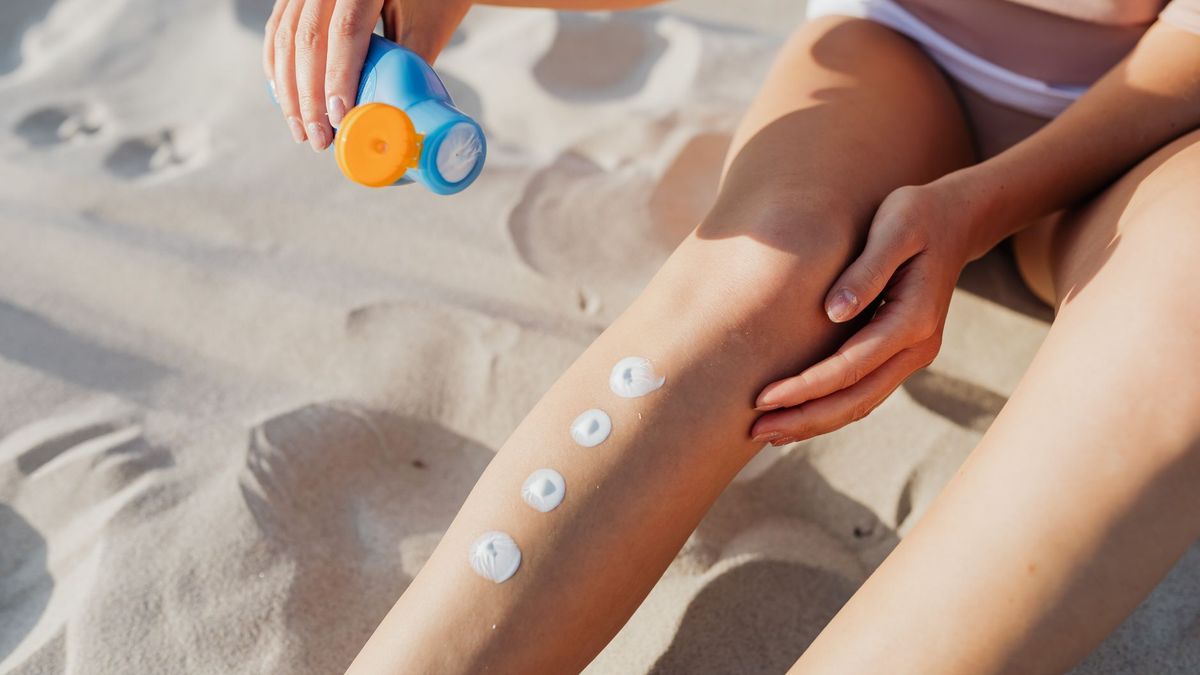
A high-SPF product applied sparingly does not deliver the protection printed in large type on its label. For skin not covered by clothing, dermatologists advise that most adults use about one ounce—roughly a shot-glass amount—to cover the body. Body size, exposed surface area, and clothing will change the needed amount, but the underlying rule is simple: apply a visible, even film rather than a few quick dabs.
For the face, ears, and neck, the Academy’s practical benchmark is about one teaspoon. It can help to apply in zones: forehead and cheeks, nose and chin, ears and neck, then the arms, legs, and any other uncovered areas. This approach is less glamorous than applying everything in one hurried pass, but it makes missed patches easier to notice.
Frequently skipped places are not necessarily small risks. The FDA specifically highlights ears, lips, hairline, back of the neck, hands, tops of feet, and exposed scalp. A lip balm with SPF can cover the lips; a wide-brimmed hat may be the more dependable answer for a thinning or exposed scalp.
- Apply sunscreen 15 minutes before going outside when directions call for it.
- Use enough to make coverage even, then rub in thoroughly.
- Do a quick ‘forgotten spots’ check before leaving: ears, neck, hands, feet, hairline, and scalp.
Reapplication is an event, not just a clock alarm
The baseline rule is to reapply at least every two hours while outdoors. But the more important idea is that protection can be disturbed by activity. Swimming, sweating, and towel drying are all reasons to apply again sooner. If a water-resistant label says 40 or 80 minutes, treat that as the maximum tested time in water or while sweating before reapplication—not as an all-day allowance.
Build reapplication around moments that already occur: after a swim, before returning to a trail, after a sports break, or when drying off. For a long outdoor work shift or day at an event, keeping the bottle where it is easy to reach matters more than having an elaborate intention to reapply later.
Makeup and moisturizer with SPF can be convenient, but they do not automatically solve the quantity problem. The same principles apply: coverage must be adequate and repeated during continued outdoor exposure. A dedicated sunscreen is often easier to apply generously to exposed skin; cosmetics can then be layered in the way that works for the individual.
- Reapply at least every two hours outdoors.
- Reapply immediately after swimming, heavy sweating, or towel drying, following the product label.
- Put sunscreen where the next application will happen: day bag, sports kit, stroller, or workplace locker.
Sprays and sticks need a different technique
Sprays and sticks can be genuinely helpful, especially for touch-ups or awkward areas, but convenience can make underapplication easier. With a stick, make multiple passes over each area and rub the product in to even out coverage. With a spray, hold the nozzle close to the skin, spray generously until the skin glistens, and then rub it in. This helps turn a scattered mist into a more continuous layer.
Avoid spraying around the face, mouth, or in windy conditions. Instead, spray onto hands and apply to the face by hand. Aerosol products should also be kept away from heat, open flames, and smoking. A spray can be a workable body option, but a lotion or cream may make it easier to judge how much has actually reached the skin.
There is no universally best format. The better choice is the one that fits the situation and is applied in a sufficient amount. A stick may be useful around the eyes and for hands; a lotion can make full-body coverage more obvious; a spray can simplify some applications if it is rubbed in carefully.
- Never spray sunscreen directly onto the face.
- Do not rely on a quick mist; spray generously and rub it in.
- Keep aerosol sunscreen away from flames and avoid inhaling the spray.
Sunscreen works better with a plan for the day
Sunscreen is valuable, but it is not a force field. Clothing, a hat, sunglasses, and shade reduce the amount of ultraviolet radiation reaching the skin in the first place. Tightly woven clothing provides more protection than loose, sheer fabric, and a wide-brimmed hat protects areas a baseball cap leaves exposed, including ears and the back of the neck. Sunglasses that block UVA and UVB help protect the eyes and surrounding skin.
Checking the daily UV Index adds useful context before an outdoor day. The index forecasts the expected intensity of solar UV radiation on a scale from 1 to 11 or higher. The Environmental Protection Agency advises protection when the index is 3 or above, with extra caution at very high and extreme levels. It is a planning tool, not a test of toughness: a higher number is a cue to seek more shade, cover more skin, and pay closer attention to reapplication.
Shade is most useful when it is deliberate. An umbrella, tree canopy, covered patio, or shelter can reduce direct exposure, though reflected light still makes sunscreen, clothing, and sunglasses worthwhile. Around midday, when a person’s shadow is shorter than they are, UV exposure is often stronger; shifting optional activities earlier or later can reduce the burden on every other protective measure.
- Check the UV Index before extended time outdoors; treat 3 or higher as a prompt for protection.
- Combine sunscreen with shade, clothing, a wide-brimmed hat, and UV-blocking sunglasses.
- Plan around the sun when practical, especially during the stronger late-morning to mid-afternoon period.
Storage and special situations
Sunscreen is a regulated over-the-counter drug product, so its expiration date and storage directions deserve attention. Check the date before a season begins, and do not leave containers baking in direct sun, a hot car, or a glove compartment for long periods. Excessive heat can degrade the product; protecting the bottle in a towel, bag, or shade is a small habit that helps preserve it.
For infants younger than six months, FDA labeling directs caregivers to ask a doctor. More broadly, young children benefit from the same layered approach as adults: shade and protective clothing first, then sunscreen on exposed skin according to the product’s directions. Anyone who develops a rash or another reaction after using a product should stop using it and seek appropriate medical guidance.
Finally, sun protection should not become a source of perfectionism. A missed reapplication is not a reason to give up for the day. Put on more when you remember, add a hat or cover-up, move to shade, and make the next exposure easier to manage. The durable routine is the one with enough backups to survive ordinary life.
- Check expiration dates and replace products that are expired or have been poorly stored.
- Keep containers out of prolonged direct heat and sun.
- For babies under six months, ask a doctor about sunscreen use; prioritize shade and protective clothing.
Final thoughts
Correct sunscreen use is mostly a matter of translating label claims into habits. Choose broad-spectrum, water-resistant SPF 30 or higher; apply a generous, even layer before exposure; and reapply after two hours or sooner when water, sweat, or towels intervene.
Then make the system less dependent on sunscreen alone. A quick UV Index check, shade, protective clothing, a hat, and sunglasses make outdoor time more comfortable and reduce the chances that one missed spot or delayed reapplication does all the deciding.
Sources
Photo by https://kaboompics.com/ on Pexels.