“Fresco” and “mural” are often used as though they mean the same thing. They overlap, but they answer different questions. A mural tells you chiefly where and at what scale an artwork lives: on a wall, often as part of a building or public space. A fresco tells you how a painted wall surface was made: pigment was applied to wet lime plaster, becoming bound into it as the plaster sets.
That distinction is more than vocabulary. It changes what you notice when you stand before a painted wall: the pace imposed on the artist, the kinds of color that were possible, the risks faced by conservators, and the intimate connection between an image and the architecture around it. Learning the difference also makes room for a more useful insight: many of history’s most celebrated “frescoes” are murals, but not every mural is a fresco.
Two terms, two questions
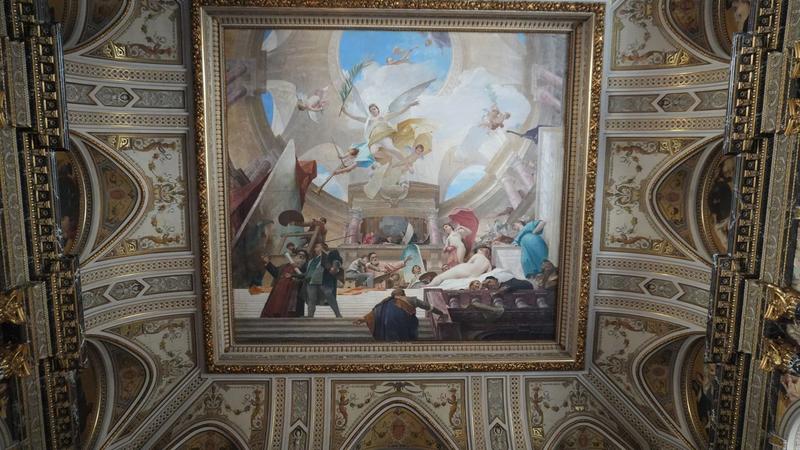
A mural is broadly a wall-based work of art. It may be painted directly onto plaster, brick, concrete, or another architectural surface; it may also be painted on canvas or panels and later attached to a wall. The word is therefore about location, scale, and relationship to a site rather than one mandatory recipe. A mural can transform a stairwell, chapel, school, train station, civic building, or exterior street wall because it is designed in dialogue with a particular space.
Fresco is much narrower. The Italian word means “fresh,” referring to the fresh plaster used in the process. In true fresco, often called buon fresco, an artist applies pigments mixed with water onto a newly laid, still-wet layer of lime plaster. As that plaster dries and reacts with carbon dioxide in the air, the color becomes integrated with the plaster surface. The image is not simply sitting like a film of paint on top of a wall.
The terms can thus be arranged like a Venn diagram. A true fresco is a kind of mural or wall painting. But a mural may use acrylic paint, oil, tempera, casein, spray paint, mosaic, printed material, canvas, or other methods. Calling every large wall image a fresco erases those material differences.
- Ask “Is it a mural?” to learn about the artwork’s site and architectural role.
- Ask “Is it a fresco?” to learn about a specific wet-plaster painting technique.
- An artwork can accurately be both a mural and a fresco.
Fresh plaster sets the clock
True fresco is a demanding medium because the wall determines the working schedule. A painter cannot prepare a vast surface of smooth finishing plaster and return to it at leisure. Instead, the surface is typically divided into manageable daily areas, known in Italian as giornate. Only the portion that can be completed before the plaster dries is freshly prepared that day.
This practical limit leaves evidence in the finished work. Conservators and close viewers can sometimes see the boundaries between giornate in raking light or through careful study. They can also detect planning systems beneath the color: rougher plaster layers, preliminary drawings, incised guides, and red-earth underdrawings known as sinopie. These are records of decisions made before the final surface hid much of the preparation.
The clock also affects style. A fresco painter needs a clear plan, fast execution, and confidence about where contours and color areas will go. That does not mean frescoes are mechanically rigid. It means spontaneity has to be organized. An apparent flourish in a fresco may rest on extensive drawing, cartoons, measurements, and labor completed before the wet plaster was applied.
- Arriccio: a rough preparatory plaster layer.
- Intonaco: the smooth, wet finish coat painted in a true fresco.
- Giornata: the section of intonaco intended for one day’s work.
- Sinopia: a preparatory drawing, often in reddish pigment, on an earlier layer.
Dry-plaster painting changes the equation
Artists have often painted on dry plaster instead. This family of methods is commonly called fresco secco, or simply secco. Because dry plaster will not chemically bind waterborne pigment in the same way, artists generally need a binder—such as limewater, glue, egg, oil, or another material—to help the color adhere. The painter gains time and may gain access to colors or effects that are difficult to use on wet lime plaster.
That flexibility has a cost. A secco paint layer may be more vulnerable to flaking or loss because it remains more separate from the plaster beneath it. Details added after a true-fresco section has dried can therefore disappear earlier than the parts painted wet. This is one reason an old wall painting may look incomplete in surprising ways: the durable foundational areas survive while later, more delicate finishing touches do not.
The distinction should not become a simplistic durability contest. Materials age in specific environments. The quality of the plaster, moisture moving through a building, salts, past repairs, structural movement, pollution, and cleaning methods can all matter. Still, knowing whether paint is chemically integrated with fresh plaster or attached to dry plaster gives conservators a crucial starting point.
- True fresco is not synonymous with all historic wall painting.
- Fresco secco can describe dry-plaster additions or a primarily dry-plaster technique.
- A fresco-like visual effect does not prove that a work is a true fresco.
Architecture is part of the artwork
A portable canvas can be moved from room to room without changing its basic format. A wall painting cannot be understood so easily apart from its setting. Its scale responds to doors, windows, vaults, columns, stairways, sightlines, and the movement of bodies through a space. A mural can direct attention upward, stretch a room outward, or turn an ordinary corridor into a narrative sequence.
That dependence makes murals unusually vulnerable and unusually revealing. A leak far from the painted image, a shifting foundation, a change in heating, or salt rising through masonry can alter the work. The building is not merely a frame; it is part of the mural’s physical system. Conservation consequently involves architects, engineers, materials scientists, curators, and communities as well as painting specialists.
This relationship also explains why removing a mural is rarely a simple rescue. In some cases, fragments have been detached and transferred to new supports. Such interventions may preserve threatened imagery, but they can alter the work’s connection to its original site. The best solution depends on condition and context, not a universal rule that leaving a work in place—or moving it—is always preferable.
- For murals, the wall’s condition can be as important as the paint surface.
- Moisture is a recurring threat because porous plaster and masonry can carry water and salts.
- Conservation often means managing a building over time, not delivering a one-time repair.
Looking without getting technical for its own sake
You do not need laboratory equipment to use the fresco-versus-mural distinction. Start by asking what the work seems to require from its setting. Does the composition wrap around architecture, use a ceiling’s curve, or address people passing through a public space? Those observations help explain its mural character.
Then look for signs of process. Are there broad, decisive passages that seem built from adjacent work zones? Do some delicate lines or intense color accents appear more fragile than surrounding areas? Is the surface visibly plaster-like, with small variations from hand application? None of these clues proves a technique by itself, but they encourage a material way of seeing rather than treating an image as a flat illustration.
Finally, resist the urge to use “fresco” as a compliment meaning old, grand, or Italian. Precise language makes the art more interesting. It recognizes the skill of artists who mastered wet plaster, while giving equal attention to the many muralists who chose other materials for artistic, practical, or political reasons.
- Notice the relationship between the image and the room before focusing on subject matter.
- Treat visible seams or losses as possible clues to process, not defects to ignore.
- Use “wall painting” when the exact technique is unknown.
The useful comparison
Fresco and mural are not competing labels. One names a technique; the other names an artistic situation. Their overlap describes an art form in which image, surface, labor, and building become inseparable.
That is the lasting appeal of painted walls. They preserve not only scenes, symbols, and colors, but also a record of making under real constraints: plaster drying by the hour, architecture shaping composition, and generations of weather and care altering what survives. The next time a painted wall is called a fresco, the productive follow-up question is simple: was it actually painted into fresh plaster—or is “fresco” being used as shorthand for a mural?
Final thoughts
The difference between fresco and mural is small enough to learn in a sentence, yet rich enough to change how wall art looks. A mural belongs to a wall and a place. A true fresco is made through the particular chemistry of pigment and wet lime plaster.
Using both words carefully does not make art appreciation fussy. It makes the wall visible—not just as a background for an image, but as one of the artwork’s essential materials.
Sources
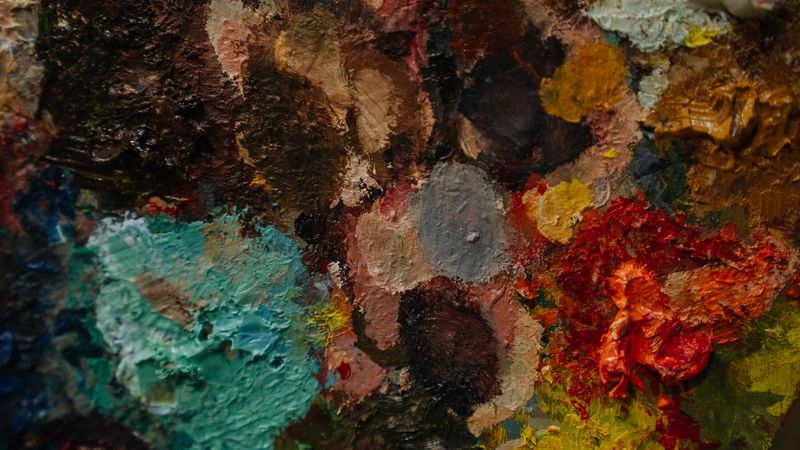
Photo by Magda Ehlers on Pexels.