Blood pressure is among the most familiar measurements in health care, yet its two-number format can make it seem more straightforward than it is. A result such as 118/76 is easy to read aloud, but it represents a moving physiological measurement influenced by the heart’s rhythm, the condition of the arteries, recent activity, body position, equipment, and even whether someone is talking during the test.
Learning to interpret the numbers is useful because high blood pressure usually produces no obvious warning signs. It is also important not to overinterpret them. One unexpected result can be a reason to repeat a measurement carefully or discuss it with a clinician; it is not, by itself, a complete picture of a person’s cardiovascular health. The real skill is understanding what each number measures, how categories work, and why a reliable pattern is more informative than a single snapshot.
Two pressures, one measurement
Blood pressure is recorded in millimeters of mercury, or mm Hg, as a pair of numbers. The systolic number comes first. It reflects the pressure against artery walls when the heart contracts and sends blood outward. The diastolic number comes second. It reflects pressure while the heart relaxes between beats.
Both numbers matter. A reading is not a score in which a reassuring lower number cancels a higher upper number, or vice versa. In the American Heart Association’s adult classification system, the higher category reached by either number determines the category used for the reading. That “or” is easy to miss, but it explains why a reading can indicate high blood pressure even when only one of its two values is above range.
The two values can also change differently over time. Systolic pressure tends to become especially important with age because large arteries commonly lose some flexibility. But that does not make diastolic pressure incidental. The useful takeaway is simpler: blood pressure is a paired measurement, and the relationship between its numbers is clinically meaningful.
- Systolic: the top number; pressure during a heartbeat.
- Diastolic: the bottom number; pressure between heartbeats.
- mm Hg: the unit used to report the measurement.
The categories are a common language, not a diagnosis
For adults, the widely used U.S. categories define normal blood pressure as below 120 systolic and below 80 diastolic. “Elevated” means a systolic value of 120–129 with a diastolic value below 80. Stage 1 hypertension includes systolic readings of 130–139 or diastolic readings of 80–89; stage 2 includes systolic readings of at least 140 or diastolic readings of at least 90.
These labels help people and health professionals communicate about risk and follow-up, but they are not meant to turn one home result into a self-diagnosis. Blood pressure naturally varies over the day and can rise temporarily after caffeine, nicotine, alcohol, exercise, stress, or a rushed walk across a parking lot. A cuff that is the wrong size can distort the result, too.
That is why screening and diagnosis are separate steps. The U.S. Preventive Services Task Force recommends confirming a high office measurement with readings outside the clinical setting before treatment begins. A clinician may use home monitoring or ambulatory monitoring, which records blood pressure repeatedly during normal daily life. The aim is to distinguish a persistent pattern from a situational spike.
- Normal: below 120 and below 80.
- Elevated: 120–129 and below 80.
- Stage 1 hypertension: 130–139 or 80–89.
- Stage 2 hypertension: 140 or higher, or 90 or higher.
Technique can change the result
A blood pressure monitor is only as useful as the conditions under which it is used. Proper preparation is not ceremonial fussiness; it reduces avoidable sources of variation. The Centers for Disease Control and Prevention advises avoiding food and drink for 30 minutes before measuring, emptying the bladder, then sitting quietly for at least five minutes. The person should sit with back supported, feet flat and uncrossed, and an arm supported at chest height.
The cuff belongs directly on bare skin, not over a sleeve. Talking, texting, dangling the arm, crossing the legs, or holding the cuff below heart level can all shift a result. The fit of the cuff matters as well: an arm circumference outside the cuff’s intended range can produce misleading readings.
These details are valuable because they turn an abstract instruction—“check your blood pressure”—into a repeatable process. Repeating the same conditions each time makes it easier to tell whether numbers are changing in a meaningful way rather than merely reflecting a different posture, a stressful phone call, or a measurement taken too quickly.
- Sit quietly for at least five minutes before starting.
- Keep the cuff on a bare upper arm supported at heart level.
- Keep both feet flat, legs uncrossed, and do not talk during the reading.
- Take at least two readings, separated by one or two minutes, and record them.
Patterns beat isolated readings
A single result is a photograph; a series of well-taken readings is closer to a short film. This distinction matters for people who feel tense in a medical setting, sometimes called the white-coat effect, as well as for people whose readings are higher away from the clinic. Home measurements can add useful context, but they work best when gathered systematically and shared with a health professional rather than interpreted in isolation.
An American Heart Association scientific statement describes a common home-monitoring approach: two readings at least one minute apart in the morning and two in the evening, ideally over seven days, with the average considered. A person’s own care team may recommend a different schedule depending on why monitoring is being done, medications, pregnancy, other health conditions, or recent results.
Keeping a simple log makes the pattern legible. Record the date, time, both readings, and relevant circumstances such as a missed medication, illness, unusual stress, or recent exercise. This does not mean trying to explain away every high number. It means giving the clinician better information to assess whether a pattern is real and what might be contributing to it.
- Use the same time windows and setup when possible.
- Record individual readings rather than only the day’s highest or lowest result.
- Look for an average and trend, not perfection in every measurement.
- Bring or send the log to the health professional overseeing care.
Choosing a monitor matters
For home monitoring, an automated upper-arm cuff is generally the practical default because clinical guidance supports validated upper-arm devices for self-measurement. “Validated” has a specific meaning: the device has been tested against accepted accuracy standards. It is not the same as being popular, highly rated online, or capable of connecting to a phone.
The U.S. Blood Pressure Validated Device Listing, supported by the American Medical Association, reviews documentation through an independent process and lists devices that meet its criteria. Its database can help shoppers identify models tested for clinical accuracy and check which cuff sizes are available. A monitor must fit the user’s arm; a validated device with an unsuitable cuff is not a good match.
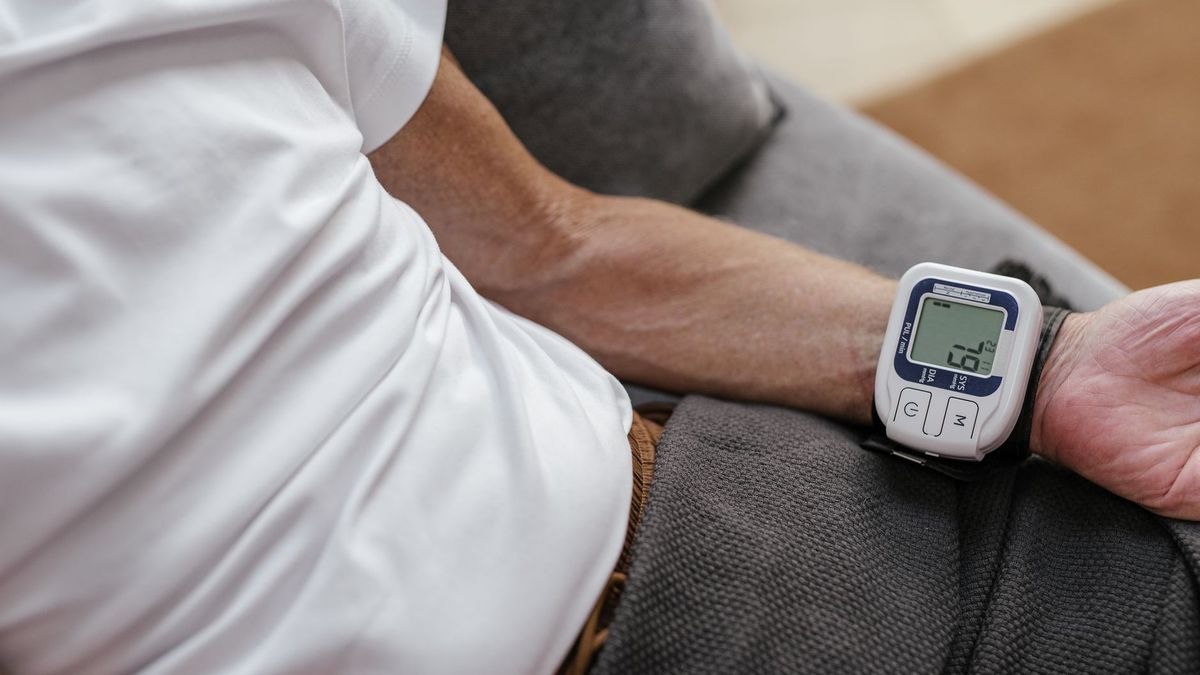
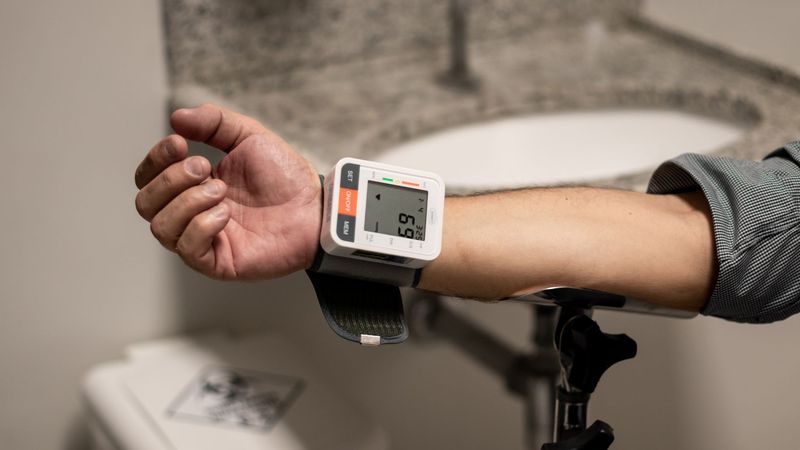
Wrist devices can be appropriate in particular circumstances, but positioning is more demanding because the wrist must be held correctly at heart level. A clinician or pharmacist can help determine whether an upper-arm cuff is feasible and whether a home monitor agrees reasonably with a measurement taken in a care setting. The goal is not to buy the most feature-packed device; it is to obtain dependable measurements that can support care.
- Prefer a clinically validated upper-arm device when it suits the person’s needs.
- Check the cuff’s stated arm-size range before buying.
- Do not assume an app, irregular-rhythm alert, or premium price guarantees accurate blood-pressure measurement.
- Ask a health professional how and when to use the monitor for an individual care plan.
When a reading needs prompt action
Very high readings deserve a different response from ordinary variation. The American Heart Association identifies readings higher than 180 systolic and/or higher than 120 diastolic as severe hypertension. If a reading is that high without symptoms, the association advises contacting a health professional promptly. If it occurs along with symptoms such as chest pain, shortness of breath, back pain, numbness, weakness, changes in vision, or difficulty speaking, it may be a hypertensive emergency and requires calling 911 in the United States.
For less extreme results, urgency depends on the full situation, including symptoms, repeated values, pregnancy, known health conditions, and guidance already provided by a clinician. The safest general principle is to avoid both panic and dismissal: sit quietly, repeat the measurement using correct technique when appropriate, and seek professional guidance for concerning or persistently high results.
Blood pressure literacy is therefore not about memorizing a chart. It is about using the chart alongside sound measurement habits, repeated observations, and medical follow-up. That combination turns two changing numbers into information that can actually be acted on.
- A reading above 180 and/or 120 with emergency symptoms warrants calling 911 in the United States.
- A very high reading without those symptoms still warrants prompt contact with a health professional.
- Do not change prescribed medication based only on a home reading unless a clinician has given specific instructions.
Final thoughts
The most useful thing a blood pressure reading can do is start a better conversation. Knowing the difference between systolic and diastolic pressure, recognizing that either number can matter, and measuring under consistent conditions makes the data more trustworthy.
A monitor does not provide a verdict on health in a single moment. Used carefully, it provides a record of patterns—one that can help clinicians identify risk, confirm a diagnosis, and assess whether a plan is working.
Sources
Photo by SHVETS production on Pexels.