When a museum returns an object, it can look like a subtraction: one less sculpture, ceremonial item, manuscript, or archaeological piece available for visitors to see. But cultural restitution is increasingly understood as something more consequential than removing an item from a display case. It asks how an object arrived, who had the authority to transfer it, what relationships were disrupted, and who should help determine its future.
The answer is not identical in every case. A work stolen in a recent conflict, an object removed from an archaeological site, a colonial-era acquisition, and an ancestral burial item raise different legal and ethical questions. Still, the process can make a museum collection more meaningful—not by pretending its difficult history never happened, but by making that history visible and by treating communities connected to objects as participants rather than footnotes.
More than a change of address
Restitution generally means returning cultural property to a country, people, or community with a valid claim. “Repatriation” is often used when the return concerns Indigenous peoples, ancestral remains, funerary belongings, sacred items, or objects of cultural patrimony. In ordinary conversation, the terms overlap; in law and museum practice, their specific meaning can matter.
The important point is that these objects are not always best understood as movable decorations or collectibles. They may carry religious responsibilities, collective memory, knowledge about a place, or connections to ancestors. Their removal can also strip away context. An archaeological object with no reliable record of where it was found may be visually intact while much of its historical and scientific value has been lost.
This is why a return is not simply about deciding where an object will sit. It can restore the possibility that a community will use, interpret, safeguard, or decide not to display material that has meaning beyond a museum’s conventional categories.
The legal map has real limits
International agreements provide important tools, but they do not settle every historical claim. UNESCO’s 1970 Convention established a framework for preventing illicit import, export, and transfer of cultural property, while the 1995 UNIDROIT Convention added private-law rules intended to help with the return of stolen or illegally exported objects.
These frameworks are especially relevant to modern illicit trafficking. Yet they are not universal time machines. UNESCO notes that the 1970 Convention is non-retroactive, meaning it does not automatically resolve objects removed before the convention applied to the countries involved. National ownership rules, export laws, limitation periods, documentation, and the location of an object can all affect a claim.
As a result, an institution may face a situation in which it can legally retain an object but is asked to consider whether retaining it is ethically defensible. That distinction is central. Restitution may result from a court order or treaty obligation, but it can also result from negotiation, institutional policy, and an acknowledgment that older collecting practices caused harm.
Provenance turns a label into an investigation
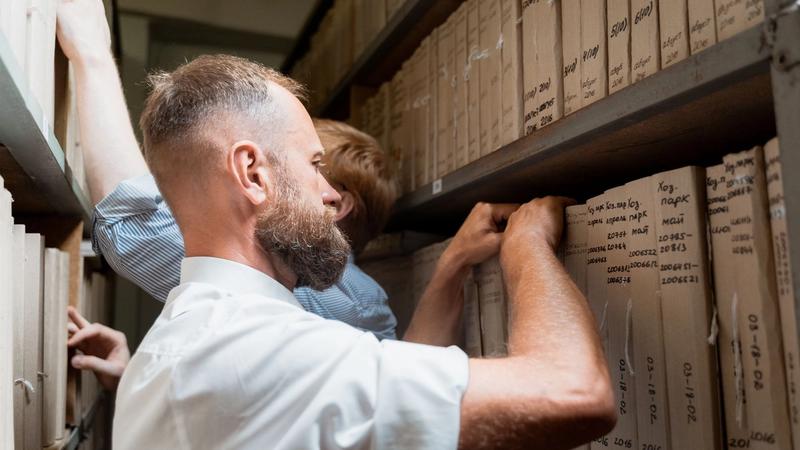
Provenance is the documented history of an object’s ownership and movement. It is not merely a prestige-enhancing list of collectors. Good provenance research asks practical questions: When did the museum acquire the object? From whom? Is there a record of export permission? Was it excavated, sold, inherited, or transferred during war, occupation, colonial rule, or political upheaval? What is missing from the paper trail?
Incomplete records do not automatically prove wrongdoing. Historical archives can be fragmentary, and names, borders, and legal systems change. But a gap should not be treated as a blank check. It may point to the period that requires the closest scrutiny, especially when an item emerged on the market after a conflict or came from an area vulnerable to looting.
Making provenance information public changes the character of the museum record. It enables researchers and communities to bring forward evidence, correct errors, and add knowledge that an institution did not possess. ICOM’s museum ethics framework emphasizes due diligence, provenance, compliance with law, and responsible cooperation on returns. In this sense, transparency is not an afterthought to restitution; it is part of the work that makes fair decisions possible.
A claim is a conversation, not a simple test
People sometimes imagine a restitution case as a single yes-or-no question: can the claimant prove ownership? Ownership is important, but responsible assessment is usually more complex. Museums and claimants may need to consider the object’s cultural role, the circumstances of removal, relevant laws at the time, documentary evidence, oral knowledge, and whether a state, descendant group, or community body has authority to speak for it.
The stakes are particularly clear in the United States under the Native American Graves Protection and Repatriation Act, or NAGPRA. The law establishes processes for museums and federal agencies to return specified Native American human remains and cultural items to lineal descendants, Indian Tribes, and Native Hawaiian organizations. It also requires inventories, summaries, notices, consultation, and mechanisms for resolving disputes.
Consultation should not be mistaken for a ceremonial step after a museum has already reached its conclusion. It can reshape the questions being asked. A community may explain that an item is not suitable for exhibition, identify a relationship invisible in a catalogue, or offer evidence about cultural affiliation that sits outside conventional collection files.
Return does not have to mean cultural silence
A common concern is that returning objects narrows public access to world cultures. That concern is understandable, but it assumes the only meaningful access is permanent possession by one institution. Museums can build different forms of access through loans agreed with source communities, shared research, traveling exhibitions, digital documentation, co-curated interpretation, and support for conservation or local cultural institutions.
These approaches must not become excuses for delaying an appropriate return. A digital image is not equivalent to a sacred object, and a loan agreement is not a substitute for recognizing a rightful owner. Yet once a return is agreed, collaboration can preserve or even deepen public learning. The former holding museum can explain its acquisition history, the reasons for return, and the limits of its earlier account. The receiving community can decide what should be shared and on what terms.
UNESCO frames return and restitution as connected to identity, cultural rights, education, and international cooperation. That broader view helps clarify the goal: not a competition over who gets the best objects, but a more responsible cultural relationship around them.
What visitors can look for
Museum visitors cannot resolve a claim from a gallery label alone. They can, however, notice whether an institution treats provenance and community relationships as integral to interpretation. Does the label identify where and when an object was acquired? Does it acknowledge uncertainty? Does the museum explain returns, rather than quietly replacing the item? Are contemporary community voices present alongside curatorial description?
These details reveal a larger shift in what a collection is for. The older model treated museums chiefly as places that gathered, preserved, and explained objects. Those remain valuable functions. A more accountable model adds another responsibility: examining whether the institution has the right relationships, evidence, and consent to hold and interpret what it preserves.
Restitution will not make every disagreement disappear. Evidence can conflict, laws differ across borders, and communities may hold varied views about an object’s future. But uncertainty is a reason for careful, good-faith work—not for assuming that possession alone ends the story.
- Read provenance notes as historical evidence, not marketing copy.
- Notice whether labels distinguish confirmed facts from unknown parts of an object’s history.
- Treat a return announcement as an opportunity to learn about the object’s full journey, including the institution’s role in it.
- Remember that public education and community authority can coexist; neither requires the other to vanish.
Final thoughts
A museum collection becomes more meaningful when it can tell the truth about how it was formed, including the parts that are uncomfortable or incomplete. Cultural restitution is one way of turning that principle into action.
Returning an object may change what appears in a gallery. It can also produce better records, more honest exhibitions, stronger partnerships, and a fuller understanding that cultural heritage is not only something to look at. It is something people have the right to relate to, care for, and define.
Sources
Photo by https://kaboompics.com/ on Pexels.