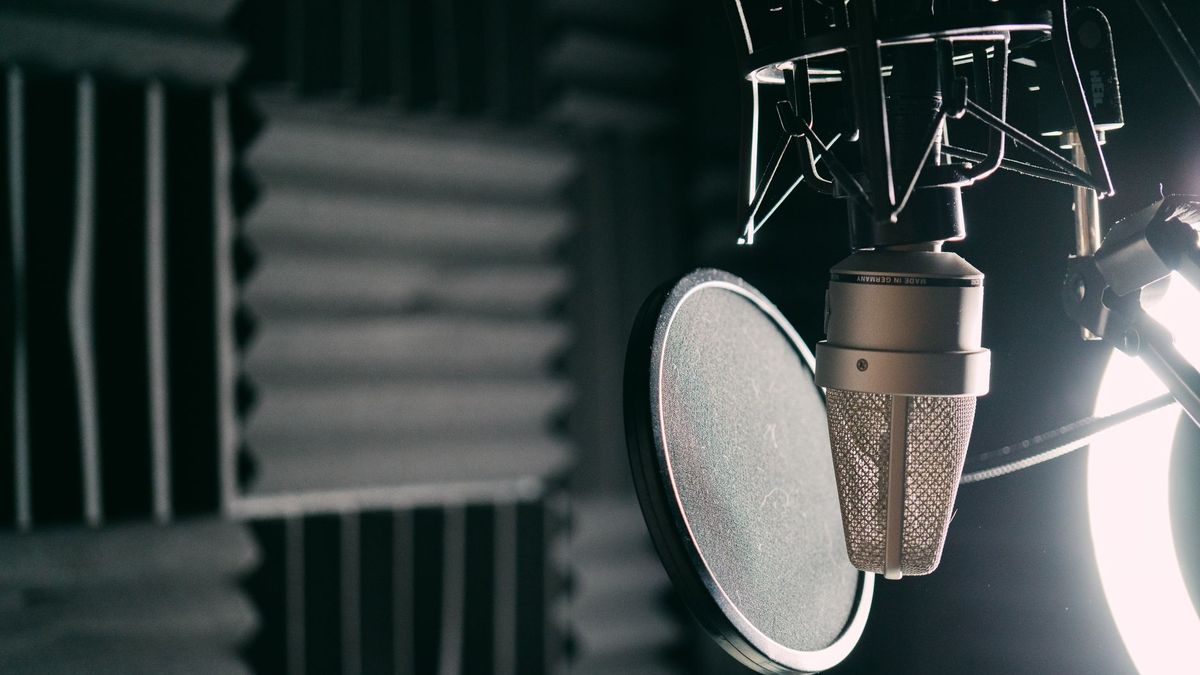
When a film is dubbed, its images remain largely the same, but one of its most expressive layers is rebuilt: the human voice. A viewer hears new timing, new breath, new emphasis, and often a new social register. That makes dubbing more than a delivery system for translated words. It is a second performance designed to inhabit the first.
This matters because dubbing is often judged by a narrow test: do the lips match? Lip sync matters, especially in close-ups, but it is only one constraint among several. The more interesting question is whether the new voices preserve the scene’s dramatic relationships—who sounds guarded, playful, threatening, formal, exhausted, young, or out of place. A convincing dub is not invisible because it copies everything. It works because it makes a different language feel as though it belongs to the same moment. ([cambridge.org](https://www.cambridge.org/core/elements/pragmatics-in-translation/2253C3F6A17EEC4A08297B137450D402?utm_source=openai))
The voice is part of the character
In live-action cinema, an actor’s face and voice arrive as one performance. Dubbing separates them. The on-screen actor still supplies gesture, gaze, posture, and movement, while a target-language voice actor supplies the audible personality. That replacement inevitably changes the work’s texture, even when the translation is accurate.
A low, clipped delivery can make a character seem self-controlled; a faster, brighter delivery can make the same lines feel anxious or comic. Accent, politeness, slang, pauses, and vocal age all carry cultural information that cannot be handled by dictionary equivalence alone. Translation scholars therefore treat audiovisual translation as situated language use: meaning is made by dialogue together with image, sound, performance, and the viewer’s assumptions about a scene. ([cambridge.org](https://www.cambridge.org/core/elements/pragmatics-in-translation/2253C3F6A17EEC4A08297B137450D402?utm_source=openai))
- The written translation has to make semantic sense.
- The spoken line has to fit the available time.
- The voice has to sound plausible for the person on screen.
- The delivery has to support the scene’s emotional rhythm.
Synchronization reshapes the script
Dubbing translators and dialogue adaptors work inside a fixed visual container. A line cannot continue long after the character’s mouth has closed. It should also land around visible pauses, turns, laughs, interruptions, and major mouth movements. That means a faithful word-for-word rendering may be unusable, while a slightly rephrased line may better preserve the scene’s effect.
Lip sync is especially noticeable on sounds made with closed or strongly shaped lips, such as p, b, and m. But timing is broader than the lips. A dubbed line must enter and end at credible moments, while body movement and facial expression must not contradict what the audience hears. Research and professional discussions commonly distinguish phonetic synchronization, timing or duration, and synchronization with visible movement. ([aclanthology.org](https://aclanthology.org/2022.iwslt-1.0.pdf?utm_source=openai))
A small scene shows the trade-off
Imagine a character leaning toward a friend, visibly beginning with a long open-mouthed exclamation, then snapping shut on a short final word. In the original language, the line might literally mean, “You forgot again?” A direct translation into another language could be substantially longer, placing its stressed syllable after the actor has already turned away.
The adaptor has choices. They might use a shorter phrase with the same accusation, move information into a preceding line, or select words whose rhythm better fits the mouth movement. None of these is a mechanical correction. Each choice adjusts emphasis. “Again?” may foreground exasperation; “You forgot?” may foreground disbelief. The task is to retain the dramatic action of the line—not merely its informational content.
This is also why dubbing can alter jokes. Comedy often depends on surprise arriving at a precise instant. If a pun cannot travel, the team may build a different joke that lands where the original reaction, cut, or visual gag requires it to land. The result can be culturally closer for the new audience, but it is no longer identical in wording.
Local references may need a new route
Culture-specific language creates a further problem. A food brand, television personality, school custom, or wordplay may carry immediate associations for the original audience but none for another. Leaving it untouched can preserve foreignness; adapting it can preserve function. Neither option is automatically more respectful or more accurate.
A study of the Lithuanian dub of *Shrek the Third* examines exactly this tension: localized cultural items can collide with the demands of synchronization. The case is useful because animation seems, at first glance, easier to dub than live action. Yet animated speech is still timed and performed, and a localized reference still has to fit the character’s delivery and the scene’s pace. ([kalbos.ktu.lt](https://kalbos.ktu.lt/index.php/KStud/article/view/24743?utm_source=openai))
The important distinction is between changing a reference to make it easier and changing it to recreate what it does. If an original reference marks a character as pretentious, childish, provincial, or politically evasive, an adaptor may seek a target-culture reference that produces a comparable social signal. That is interpretation, not simply simplification.
Subtitles and dubbing preserve different things
It is tempting to frame subtitles as authentic and dubbing as compromised. Both make trade-offs. Subtitles retain the original recorded voices, accents, vocal acting, and much of the source-language sound. But they convert speech into brief written text that must be read while the viewer watches the image. They also condense: a subtitle cannot comfortably display every hesitation, overlap, repetition, or aside.
Dubbing preserves continuous spoken access in the viewer’s language and can make a fast-moving scene easier to follow visually. Yet it replaces the original vocal performance and can make the translated dialogue feel unusually smooth or unusually constrained. The formats therefore produce different encounters with the same work, rather than a simple hierarchy of faithful and unfaithful versions. ([translationjournal.net](https://translationjournal.net/journal/22subtitles.htm?utm_source=openai))
The invisible work has limits
A good dub does not erase every difference between languages, and it should not be expected to. Languages distribute information differently: one may express a social relationship in a pronoun, another in a title or verb ending; one may allow a compact phrase where another needs several words. Perfect semantic equivalence, natural speech, exact duration, and flawless lip matching cannot always be achieved simultaneously.
There is also genuine scholarly disagreement over how much viewers prioritize lip synchronization relative to acting, naturalness, and cultural adaptation. Some research treats lip sync as central to immersion; other work warns that its importance can be overstated. That uncertainty is productive. It keeps attention on the viewer’s whole experience rather than reducing quality to mouth movements alone. ([kalbos.ktu.lt](https://kalbos.ktu.lt/index.php/KStud/article/view/24743?utm_source=openai))
Automation sharpens the issue rather than settling it. Systems can help align translated speech with video, but matching duration and visible articulation does not by itself decide how a joke should land, whether a character sounds sincere, or which cultural implication deserves protection. Those are editorial and performance judgments.
What attentive viewers can notice
Watching a dubbed film more closely does not require knowing the source language. Listen for moments where a voice seems to carry a social relationship: a formal address that creates distance, a suddenly casual phrase that signals intimacy, or a pause that turns an ordinary sentence into a threat. Notice whether the voice and face appear to be playing the same beat.
If multiple versions are available, comparing a brief scene can be revealing. The goal is not to catch errors. It is to see the cultural labor hidden in an apparently seamless experience. A dub is a collaborative reconstruction by translators, adaptors, directors, actors, and sound teams. Its success lies in making viewers feel a scene in their own language while still leaving them in contact with a story made somewhere else.
Final thoughts
Dubbing creates a new performance because film dialogue is never only a string of words. It is timing, character, sound, and cultural implication working under visual pressure.
The best question is not whether a dub reproduces an original perfectly. It is whether its new voices preserve the scene’s dramatic purpose honestly enough that another audience can enter it without being asked to ignore the craft that made it possible.
Sources
Photo by Jessica Lewis 🦋 thepaintedsquare on Pexels.