The phrase “last speaker” suggests a clean ending: one person dies, and a language dies with them. It is a powerful image, but it can conceal more than it explains. A language is not only a count of fluent individuals. It is a living set of relationships—among speakers, learners, places, memories, songs, texts, institutions, and the everyday reasons people have to use particular words with one another.
That does not make language loss less serious. When children are no longer learning a language for ordinary life, its future is in real danger. But the disappearance of its last fluent speaker is not always the same thing as the disappearance of every record, every partial knowledge-holder, or every possibility of renewed use. The distinction matters because it changes what “saving” a language can honestly mean.
A speaker count is not a vitality score
UNESCO’s framework for language vitality puts intergenerational transmission at the center. A language is safest when children and adults use it across daily life; it becomes increasingly endangered when use is restricted to older generations or special settings. The number of speakers matters, but it is only one factor alongside where the language is used, whether learning materials exist, how institutions treat it, and whether the community sees it as valuable. ([unesdoc.unesco.org](https://unesdoc.unesco.org/in/documentViewer.xhtml?ark=%2Fark%3A%2F48223%2Fpf0000183699%2FPDF%2F183699eng.pdf&file=%2Fin%2Frest%2FannotationSVC%2FDownloadWatermarkedAttachment%2Fattach_import_6e69a18e-73f5-4dd6-80a7-d3614f679aa6%3F_%3D183699eng.pdf&id=p%3A%3Ausmarcdef_0000183699&locale=en&multi=true&v=2.1.196&utm_source=openai))
This is the first correction to the “last speaker” story. A language with several thousand elderly speakers but few children learning it may be in a more precarious position than its raw population suggests. Conversely, a language with relatively few speakers can remain vigorous when children acquire it and people use it at home, at work, online, and in public life. Survival is less like keeping an artifact in storage than maintaining a practice people can carry into tomorrow.
- Fluency is not binary: people may understand more than they speak, know ceremonial language, remember family phrases, or be actively learning.
- A language can be present in recordings, manuscripts, dictionaries, and community memory without yet being a language of everyday conversation.
- Terms such as “extinct,” “dormant,” and “sleeping” can carry different meanings for scholars and for the communities whose languages are involved.
What is lost when everyday speech stops
When no one can sustain ordinary conversation in a language, an irreplaceable form of cultural transmission is interrupted. Grammar and vocabulary may be recorded, but knowing a word’s dictionary definition is not identical to knowing when it is affectionate, formal, teasing, sacred, or inappropriate. Conversational timing, local humor, styles of storytelling, and the confidence to improvise are hard to preserve fully outside regular social use.
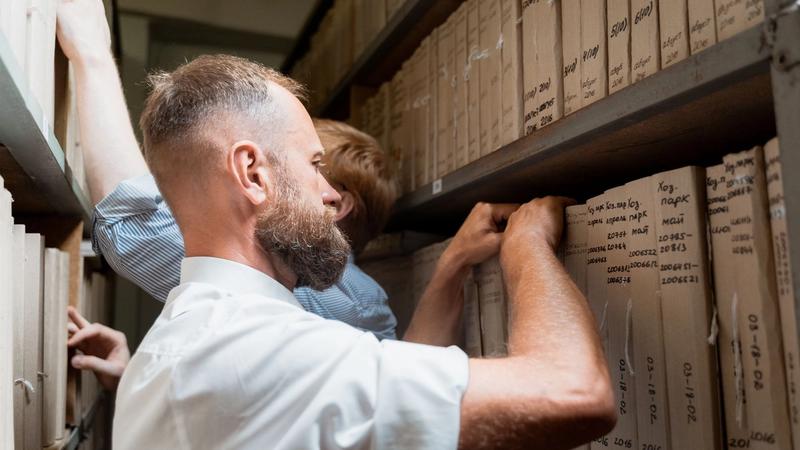
This is also why treating languages as containers of detachable information is inadequate. Archives can preserve accounts of fishing practices, kinship, medicinal knowledge, songs, and local history; the Endangered Languages Archive holds exactly such multimedia materials. Yet an archive is not a substitute for a community deciding what should be shared, with whom, and under what conditions. ([latam.elararchive.org](https://latam.elararchive.org/?utm_source=openai))
The loss is shaped by history, not merely by personal preference. UNESCO identifies political, economic, educational, religious, and cultural pressures as forces that can stop transmission, including pressures that lead speakers to associate their own language with disadvantage. That context makes the romantic focus on a lone final speaker incomplete: it can obscure the systems that narrowed people’s choices in the first place. ([ich.unesco.org](https://ich.unesco.org/doc/src/00120-EN.pdf?t=1268152629&utm_source=openai))
Documentation keeps possibilities open
If a language ceases to be spoken, good documentation cannot recreate every aspect of the former speech community. It can, however, preserve evidence that future community members may use. Recordings capture voices and interaction; annotated texts show how words work in context; dictionaries and grammatical descriptions help learners make and understand new sentences; historical documents can reveal older vocabulary and patterns.
Documentation is therefore best understood as infrastructure, not a resurrection button. Its quality, accessibility, long-term preservation, and ownership rules all matter. A pile of field notes in an inaccessible archive may be scientifically valuable yet practically unusable for descendants. Conversely, documentation designed with community priorities can support teaching, cultural projects, and future research while respecting material that should remain restricted.
There is an important ethical boundary here. Outside researchers can contribute skills in recording, archiving, and analysis, but they cannot decide that a community ought to revive a language, define the acceptable form of that revival, or claim authority over its materials. UNESCO’s guidance explicitly emphasizes the central role of speaker communities and the need for meaningful contemporary roles for endangered languages. ([ich.unesco.org](https://ich.unesco.org/doc/src/00120-EN.pdf?v=1268152629&utm_source=openai))
Wôpanâak shows what reclamation can involve
The Wôpanâak Language Reclamation Project offers a concrete answer to the question in this article’s title. Wôpanâak had not been spoken for more than a century, but it had survived in hundreds of written documents. Beginning in 1993, Wampanoag communities built a reclamation effort around those texts, linguistic analysis, teaching, and community institutions. The Library of Congress describes programs that have included a children’s immersion school, free community classes, and a dictionary. ([loc.gov](https://www.loc.gov/exhibitions/join-in-voluntary-associations-in-america/about-this-exhibition/a-nation-of-joiners/building-communities/wopanaak-language-reclamation-project/?utm_source=openai))
The worked mechanism is worth noticing. Historical texts supplied clues to words and grammatical patterns. Knowledge of related Algonquian languages helped researchers infer aspects not directly documented. But neither of those resources alone makes a community of speakers. That requires teachers, learners, time, funding, places to gather, and situations in which using the language feels purposeful rather than ceremonial or symbolic.
The project’s own account frames its work as a collaborative effort among Wampanoag communities after more than 150 years of dormancy. That wording is instructive: reclamation is not a museum restoring a finished object. It is a community making an ancestral language available for present and future relationships. ([wlrp.org](https://www.wlrp.org/?utm_source=openai))
Revival is possible, but never automatic
The Wôpanâak example should not be turned into a promise that every language can be restored to former breadth. Some languages have little documentation; some records were produced by outsiders with limited understanding; some contain no reliable guide to pronunciation or spontaneous conversation. A revived variety may also involve informed reconstruction, new terminology, and choices among regional forms. Those choices are not evidence of failure—they are often unavoidable parts of rebuilding a usable language—but they should be acknowledged honestly.
Even well-resourced programs face a hard test: can learners become comfortable enough to use the language beyond the classroom? Research on assessing revitalization stresses the need to measure oral proficiency and track progress, rather than equating enrollment, a published app, or a word list with renewed vitality. ([annualreviews.org](https://www.annualreviews.org/content/journals/10.1146/annurev-linguistics-011817-045423?utm_source=openai))
There is also no neutral finish line. One community may prioritize elders and family conversation; another may focus on ceremonies, place names, schools, songs, or a new generation of proficient second-language speakers. Success should not be imposed by outsiders who expect a language to look exactly as it did before colonization, migration, or disruption.
The practical question is how a language can be used next
For readers encountering a language-reclamation effort, the most useful shift is from asking, “Is it dead or alive?” to asking, “What conditions would let people use it more freely?” That question directs attention toward childcare, teacher preparation, recordings, curriculum, community governance, language access, and protected time for learning. It also avoids making a community’s language into a spectacle whose value lies only in its rarity.
Public institutions can help by funding community-led programs over the long term, supporting Indigenous-language education, and treating digital access as more than an app-development problem. Families and learners, meanwhile, need realistic space to build habits: greetings become conversations, lessons become routines, and routines become social expectations. UNESCO’s International Decade of Indigenous Languages, running from 2022 through 2032, similarly emphasizes language rights, education, digital inclusion, and intergenerational transmission. ([unesco.org](https://www.unesco.org/en/decades/indigenous-languages/support-idil?utm_source=openai))
A language may no longer have a fluent first-language speaker and still have a future. That future will not be secured by a label, an archive, or public admiration alone. It depends on whether the people connected to it have the authority, resources, and desire to make it part of life again.
Final thoughts
The death of a last fluent speaker marks a profound rupture, not a simple off switch. It can mean the end of unbroken everyday transmission, while records, partial knowledge, and community commitments remain.
The most respectful response is neither false optimism nor fatalism. It is to recognize the loss clearly, support communities’ own decisions, and understand that a language endures most fully when people have reasons—and rights—to speak it with one another.
Sources
Photo by RDNE Stock project on Pexels.