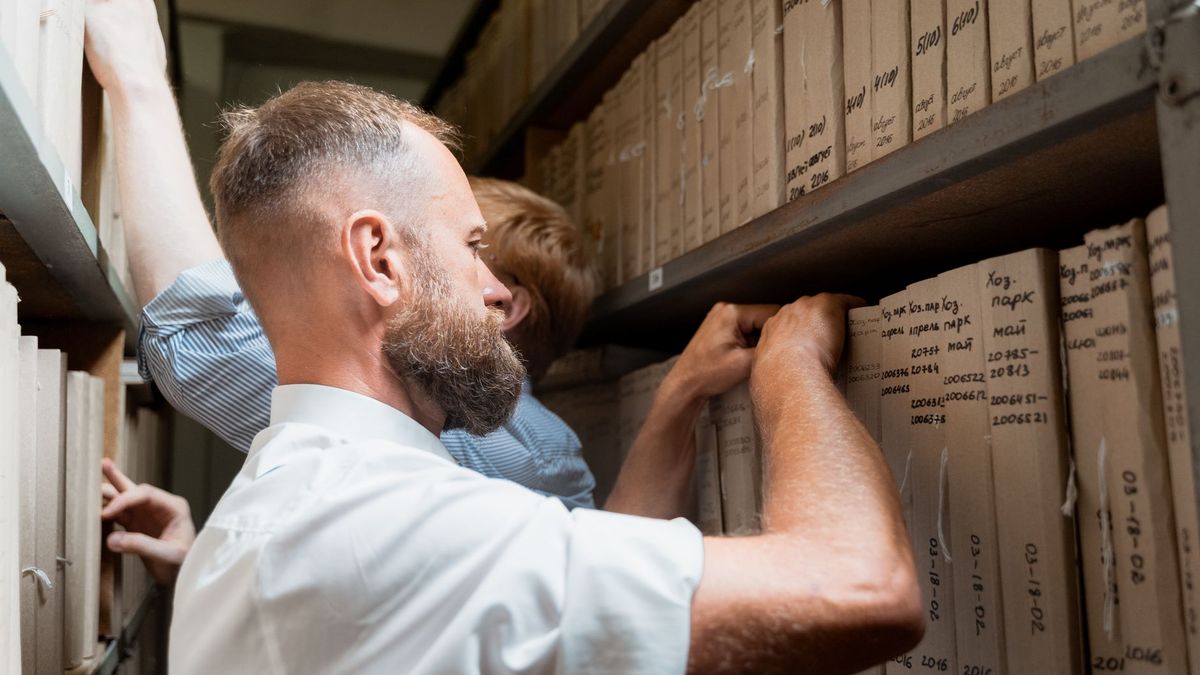
A song title, a museum wall label, a film’s closing credits, a library catalog entry: these can look like administrative extras attached after the creative work is done. In practice, they shape whether culture can be found, understood, attributed, preserved, and responsibly shared. The information around an object is often called metadata—data that describes other data—but its cultural role is much larger than the dry term suggests.
Metadata connects a work to makers, places, languages, dates, formats, communities, and histories. Without it, a digitized photograph may become an anonymous image, an oral-history recording may lose the name and consent conditions of its speaker, and a song may be separated from the musicians, engineers, and traditions that made it possible. Good metadata does not replace direct experience of art. It gives that experience enough context to travel across time.
More than a label
Metadata comes in several forms. Descriptive metadata helps people identify and discover something: title, creator, subject, date, genre, language, location, and summary. Technical metadata records how a digital object was made or converted, including file type, resolution, recording settings, and equipment. Administrative metadata may cover rights, ownership, restrictions, and preservation actions.
The categories overlap in cultural use. A date can place a photograph in a historical moment, but it can also determine copyright status. A place name can help a researcher locate a performance tradition, yet it may need to reflect a community’s preferred name rather than an outdated colonial label. A credit can recognize labor that audiences rarely see, from a translator or costume maker to an audio engineer or field recordist.
This is why a sparse caption is not always neutral. Leaving out information can make a collection easier to display in the short term, while making it harder to interpret accurately later. At the same time, adding information is not simply a matter of filling every possible field. Archives and museums must decide what they know, what they can verify, what they have permission to publish, and whose language should guide the description.
- A title tells users what an item is called.
- A creator field links work to authorship and credit.
- A rights statement clarifies what can be copied, reused, or heard.
- A provenance note explains where an item came from and how it entered a collection.
- A community note can identify relationships, names, or access expectations that standard catalog fields miss.
Discovery is shaped by description
Search systems do not encounter a painting, a recording, or a costume the way a visitor does. They encounter words, identifiers, and structured fields. A searchable archive depends on enough consistent description for people to retrieve materials they did not already know existed.
That gives cataloging real influence. If a recording is described only as “folk music,” it may be difficult for someone to find it by language, performer, instrument, region, ceremony, or community. If a film is indexed only under its director, the work of performers, writers, editors, designers, and other collaborators may remain invisible. Broad labels can be useful starting points, but they are weak substitutes for specific, well-supported information.
The Library of Congress’s National Recording Registry illustrates another side of description: cultural significance is not identical to a claim that a work is the best of its kind. The Registry selects recordings judged culturally, historically, or aesthetically significant, drawing attention both to their importance and to the need for long-term preservation. The accompanying descriptions help explain why a recording matters beyond its immediate popularity.
Searchability can also change cultural memory. What is easy to find is more likely to be studied, sampled, programmed, taught, and discussed. Metadata cannot dictate taste, but it helps set the conditions under which forgotten or overlooked work can re-enter public view.
Preservation needs a paper trail
Digitization is often described as though it were a permanent rescue: scan the page, transfer the tape, upload the file, and the problem is solved. Digital preservation is more demanding. Files can become unreadable, storage can fail, software can change, and a high-quality master may be confused with a smaller access copy unless documentation travels with it.
Institutions therefore preserve both the content and evidence about the content. The Smithsonian Institution Archives, for example, creates high-resolution preservation files and records descriptive and technical information in its systems and, for certain formats, in the files themselves. Its approach recognizes that repeatedly playing fragile audiovisual media can cause harm; a well-documented preservation master reduces the need to return to the original.
The U.S. National Archives makes the same underlying point in different terms. Its digital-preservation program emphasizes continued usability as well as authenticity, accuracy, and functionality. It also calls for fixity information—data used to check whether a file has changed unexpectedly—and records of preservation actions. In other words, a cultural file is not fully preserved merely because it exists somewhere online. Future users need reason to trust what it is and understand what has happened to it.
For everyday cultural collections, the lesson is modest but useful: keep filenames meaningful, record dates and creators while memories are fresh, retain original files when possible, and store notes separately from the platform that happens to host the work. A social-media post is an access channel, not a complete archive.
Context can be a form of care
Some of the most important information around cultural material concerns relationships rather than mechanics. Who has the authority to describe an item? Who should be able to hear or see it? Does a public record contain sacred, private, or sensitive knowledge? Are historical names harmful, incomplete, or contested? These questions cannot be settled by a universal template.
UNESCO’s approach to intangible cultural heritage is instructive here. It treats traditions, knowledge, skills, and practices as living heritage rather than as artifacts frozen in a display case. Its safeguarding framework centers communities and stresses that protection should not turn a living practice into an unchanging performance of the past.
That principle matters when archives describe recordings, photographs, and documents made with or about communities. A catalog entry can acknowledge a community’s preferred terminology, identify restrictions, or explain gaps and uncertainty in the record. It can also be revised. Revision is not a failure of cataloging; it is often evidence that more people have been able to contribute knowledge.
Care does not necessarily mean closing everything off. It means matching access to context, consent, rights, and cultural responsibilities. Sometimes wider access supports education and continuity. Sometimes a warning, an attribution requirement, a delayed release, or restricted listening is more appropriate.
Credits make culture less anonymous
Modern audiences increasingly expect credits in places where they were once scarce: podcasts list researchers and sound designers; games identify accessibility specialists; streaming releases name restoration teams; exhibitions acknowledge lenders, translators, and community advisers. This is partly about fairness, but it is also about interpretation.
Credits reveal that cultural production is collaborative. They help audiences trace a style, technique, or decision back to the people who contributed it. For historians, they can show professional networks and creative labor that would otherwise disappear behind a famous name or brand.
The same applies to older works, even when the record is incomplete. Archives should avoid inventing certainty, but they can preserve partial attribution, alternate spellings, roles described in contemporary sources, and notes about what remains unknown. A careful “unidentified” field is more honest—and more useful—than a guess presented as fact.
The best metadata is therefore neither a bureaucratic burden nor a final verdict. It is a living layer of cultural interpretation: specific enough to help people find and understand a work, transparent enough to show uncertainty, and open enough to improve when new knowledge arrives.
Final thoughts
Culture survives through people making, sharing, remembering, and remaking it. But it also survives through the quieter work of naming, crediting, describing, and maintaining the paths back to it.
When metadata is accurate, contextual, and responsibly updated, it gives art and heritage a better chance to remain more than a detached file or object. It helps cultural works keep their connections—to makers, communities, materials, and meaning—when the original moment has passed.
Sources
Photo by MART PRODUCTION on Pexels.