Culture is often described as a stream of new releases: new films, new books, new songs, new images. But some of its most productive moments begin when older work becomes newly available to everyone. That is the promise of the public domain—the body of material no longer restricted by copyright, along with material copyright never covered in the first place.
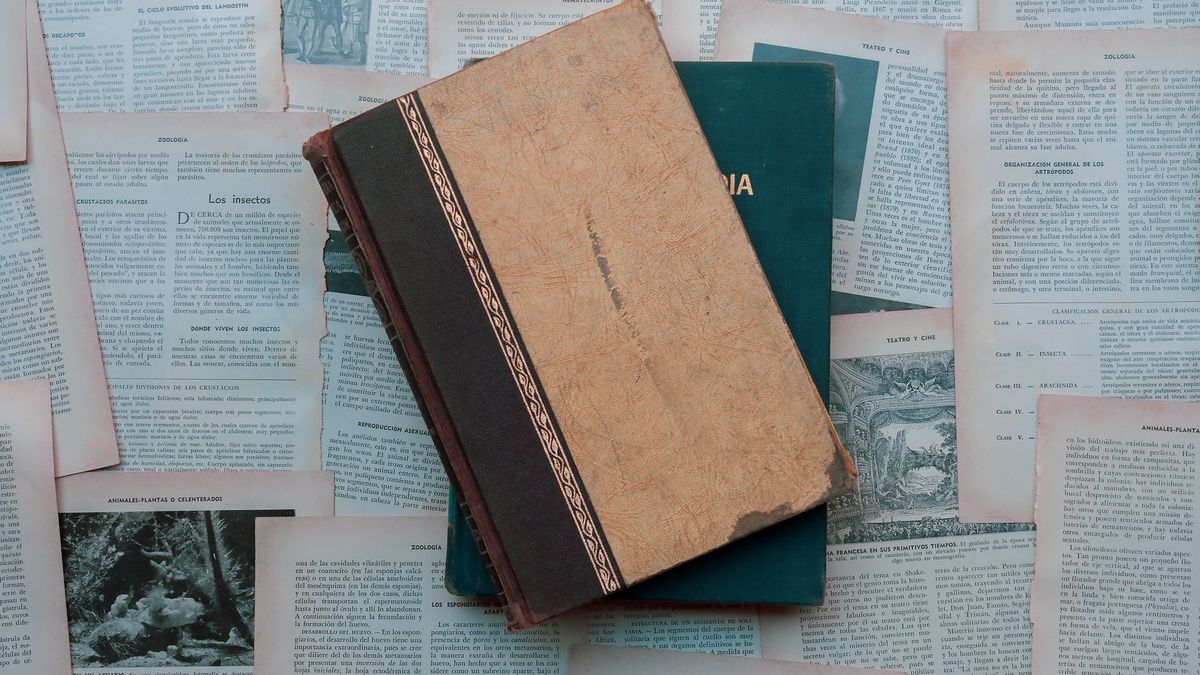
The public domain is not a museum shelf where culture goes to sit untouched. It is a working resource. It allows a teacher to build a lesson around historic photographs, a designer to turn an old botanical illustration into a poster, a filmmaker to quote from a silent-era image, or a reader to publish a fresh edition of a long-forgotten novel. Its useful lesson is simple: cultural preservation matters most when preservation also makes further creation possible.
A shared library, not an abandoned one
Copyright gives creators important control over copying, adaptation, distribution, performance, and display of their original expression. But that control has a limit. When a copyright term ends, the work enters the public domain, where it can generally be used without permission from the former rightsholder. Facts, ideas, procedures, titles, and works made by U.S. federal government employees in the course of their jobs are also among the categories that copyright does not ordinarily protect.
That boundary is not a technical footnote. It makes a cultural commons possible. A public-domain work can be reprinted cheaply, translated, annotated, staged, sampled, digitized, or placed alongside contemporary work in ways that would otherwise require tracking down permissions. The result is not merely more access to the past; it is more room for the past to participate in the present.
The U.S. Copyright Office notes that works in the public domain can inspire adaptations and other derivative works. That framing is crucial. Culture has always involved retelling: a folktale changes hands, a painting becomes an illustration, a historical document becomes a podcast episode. The public domain gives that ordinary creative process a dependable legal foundation.
- It lowers the permission burden for publishers, artists, educators, and community groups.
- It makes neglected works easier to rediscover because reuse does not require a commercial gatekeeper.
- It lets audiences encounter old material in new formats, languages, and settings.
The date alone is rarely the whole answer
It is tempting to think that anything old must be free to use. That is not reliable. Copyright duration depends on details such as when a work was created, when it was published, whether it was registered or renewed under older rules, and whether it was made for hire or published anonymously. In the United States, the Copyright Office says that works created on or after January 1, 1978, generally last for the author’s life plus 70 years. For many anonymous, pseudonymous, and work-for-hire creations, the term is 95 years from publication or 120 years from creation, whichever ends first.
There is a clearer rule for one large historical category: as of 2026, works published in the United States before January 1, 1931, are in the public domain because their copyright terms have expired. But even then, a new translation, restoration, introduction, recording, or design treatment may contain its own protected expression. The nineteenth-century novel may be free to republish; a modern editor’s notes and cover art may not be.
This is why responsible reuse begins with precision rather than vibes. The Library of Congress advises users to consult an item’s Rights and Access or Rights Advisory statement, while also emphasizing that the user is ultimately responsible for evaluating rights and other restrictions. Being able to download an image from an archive is not, by itself, proof that every possible reuse is allowed.
- Check the status of the specific item, not only the underlying work.
- Separate the original work from later additions such as translations, photographs, soundtracks, and annotations.
- Remember that copyright is not the only consideration: trademarks, privacy, contracts, and community concerns can matter too.
Digitization changes who can take part
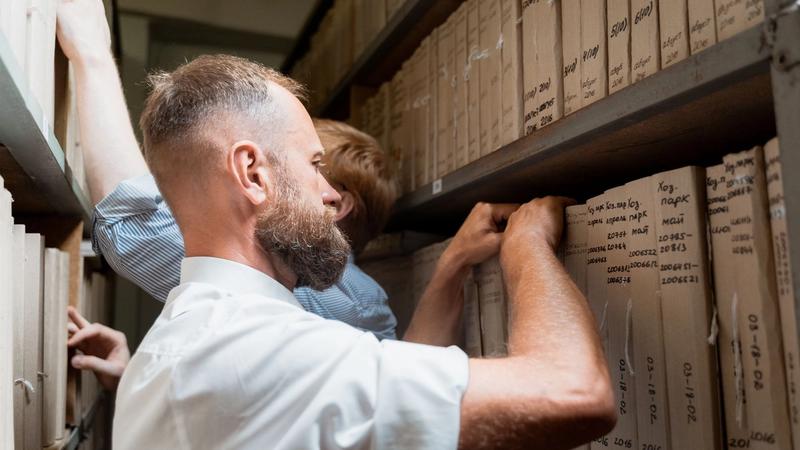
For most of the public domain’s history, practical access depended on geography. A work might be legally free but physically locked in a distant library, a fragile archive box, or an expensive out-of-print edition. Digitization changes that equation. It can make source material searchable, downloadable, comparable, and available to people who would never be able to visit the holding institution.
The Smithsonian’s Open Access program shows what this can look like at scale. Its collection includes more than five million downloadable 2D and 3D digital assets, with many designated CC0, a tool that places an institution’s applicable copyright and database rights as fully as possible into the public domain. That means researchers, students, artists, and small organizations can use eligible materials without asking the Smithsonian for permission or paying a fee.
This availability creates new kinds of cultural participation. A local historian can combine maps and photographs into a neighborhood walking guide. A classroom can use high-resolution natural-history images rather than generic stock visuals. A game designer can study historic objects in three dimensions. None of those outcomes replaces the original collection; they extend its reach and give it new audiences.
Open access also demonstrates that metadata is part of cultural infrastructure. A scan without a date, creator, location, or description is harder to find and easier to misunderstand. Good catalog information makes reuse more accurate. It connects a striking image to its history, helps viewers notice what they are seeing, and lets future users trace the route back to the original object.
- Digital access expands cultural participation beyond major institutions and large budgets.
- Metadata helps people find, verify, and contextualize materials.
- Open files are most useful when paired with clear rights information.
Freedom does not remove responsibility
The public domain eliminates certain copyright barriers; it does not erase the need for judgment. An image can be legally reusable and still benefit from careful context. A historical photograph may contain stereotypes, violence, sacred material, or records of people whose communities have not had equal power over how they are represented. The Library of Congress asks users of its collections to approach material with respect for the cultures and sensibilities documented in them.
Credit is another useful habit. With a public-domain work or CC0 asset, attribution is often not legally required. Yet Creative Commons describes it as an ethical and cultural expectation in many situations. Naming the maker when known, the holding institution, the item title, and the source does practical work: it honors labor, lets others verify claims, and helps the next person locate a better copy or more complete context.
The best reuse is therefore neither timid nor extractive. It is adventurous about making new work and disciplined about showing where the work came from. A collage can identify its source archive. A new edition can explain editorial choices. A social post can avoid implying that an archival image documents an event it does not. These are not bureaucratic extras. They are ways of keeping the shared library intelligible.
- Credit sources even when a legal rule does not demand it.
- Do not treat an archive’s online display as a blanket permission statement.
- Add context when reuse could distort an object’s history or meaning.
The creative lesson is bigger than copyright
The public domain reveals that originality and inheritance are not opposites. New work does not emerge from a vacuum; it emerges from language, forms, images, stories, techniques, and records that earlier people made available. Copyright protects authorship for a time. The public domain ensures that, eventually, parts of the cultural record can again become material for everyone.
That cycle is especially valuable in an era when many people experience culture through platforms built around the newest, most visible material. Public-domain collections offer a counterweight. They make room for the obscure, the regional, the unfashionable, and the unfinished. They invite people to browse beyond the current feed and to make connections that commercial systems may have little reason to surface.
The practical takeaway is modest: when you need an image, a story, a sound, or an idea for a project, look backward as well as outward. Search a library, museum, or archive with clear rights information. Learn the provenance of what you find. Then make something that adds value rather than merely borrowing a look. Culture’s second life begins when old work is not only preserved, but actively and thoughtfully used.
Final thoughts
The public domain is often discussed as a legal category. It is better understood as a cultural condition: a space where works can circulate, be questioned, and become raw material for new expression.
Its existence does not make every old object simple to use, and it does not excuse careless reuse. But when institutions pair preservation with open access, clear rights information, and good context, they give more people a genuine role in cultural life. The past stops being a locked collection and becomes a conversation.
Sources
Photo by Arturo Añez. on Pexels.